Since 1899
The Campus Is an Argument Carried Out in Rock
A president thought his college looked like a shoe factory. A century later, the Board of Visitors wrote stone into policy. Every building shows who was winning the year it went up.
- 1888Barracks No. 1, now Lane Hall, goes up in brick for about $20,000.
- 1899June 20: cornerstone for the YMCA, the first native-limestone building.
- 1905The stone Chapel opens; Virginia Tech calls it the campus debut of neo-Gothic.
- 1914The first McBryde Hall sets the Gothic-plus-limestone template.
- 1922President Burruss rules that new buildings around the Drillfield get limestone walls.
- 1953The on-campus quarry closes; Derring Hall later goes up on the site.
- 1987Students and faculty protest a proposed stone addition to Cowgill Hall.
- 1990Hancock Hall is completed with Hokie Stone walls.
- 2010The Board of Visitors makes Hokie Stone official policy for the central campus.
- 2021December: a $35 million gift launches Mitchell Hall on the Randolph site.
Before the stone, there was brick
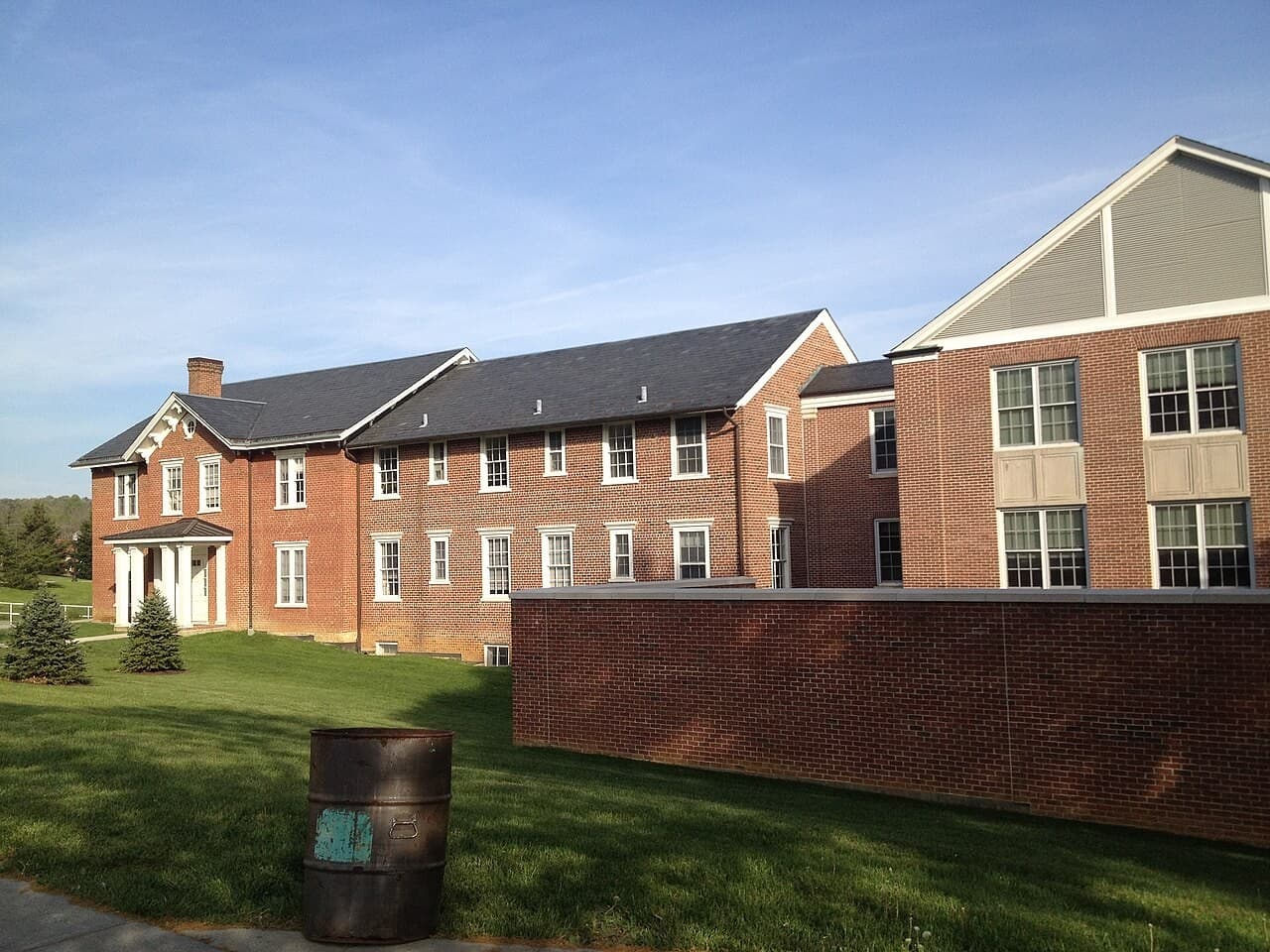
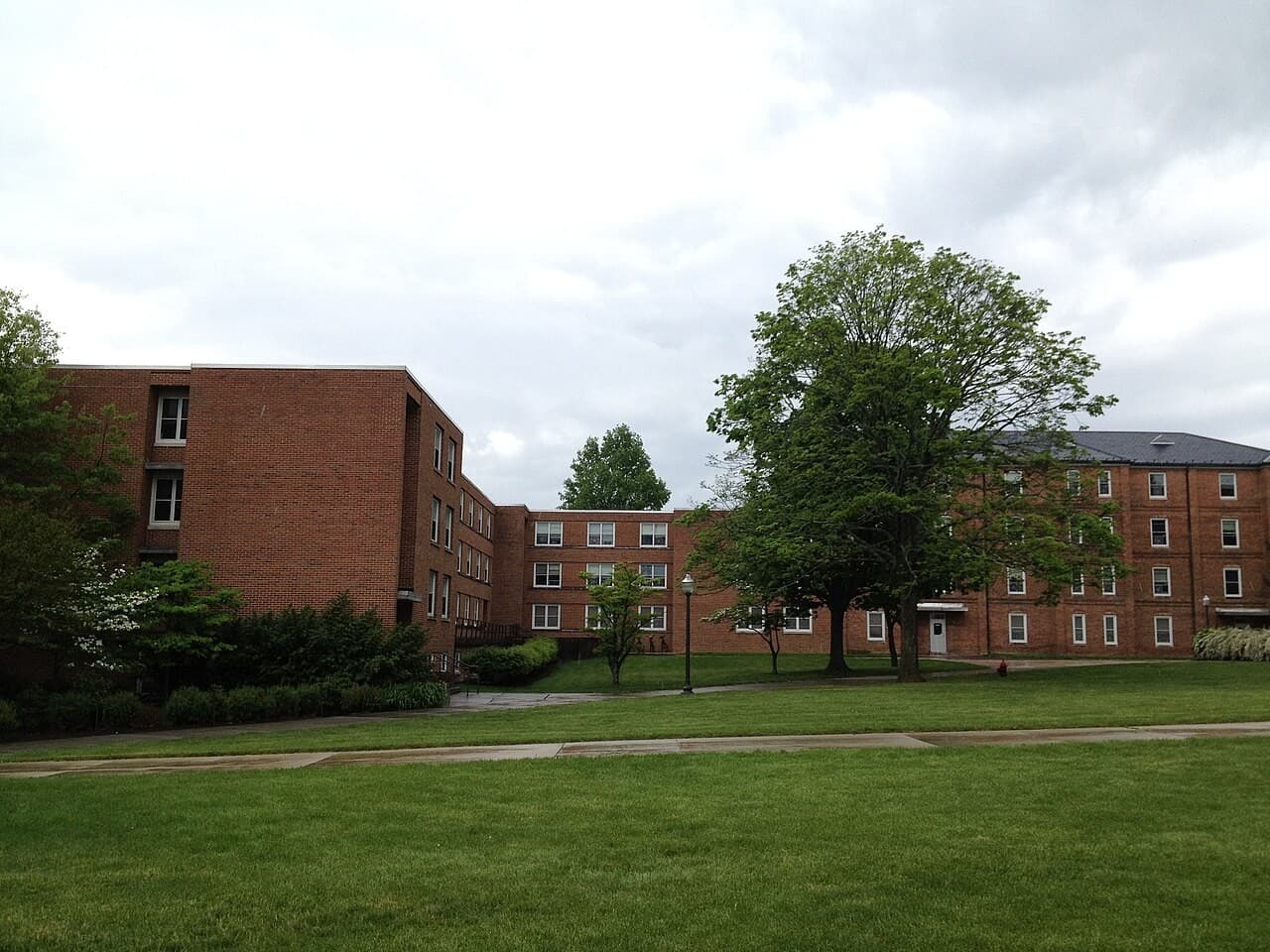
When the college opened on October 1, 1872, it had exactly one building, the Preston and Olin building. What came next was brick. A 1986 state survey of Montgomery County describes the buildings put up after 1872 as brick, influenced by Italianate design.
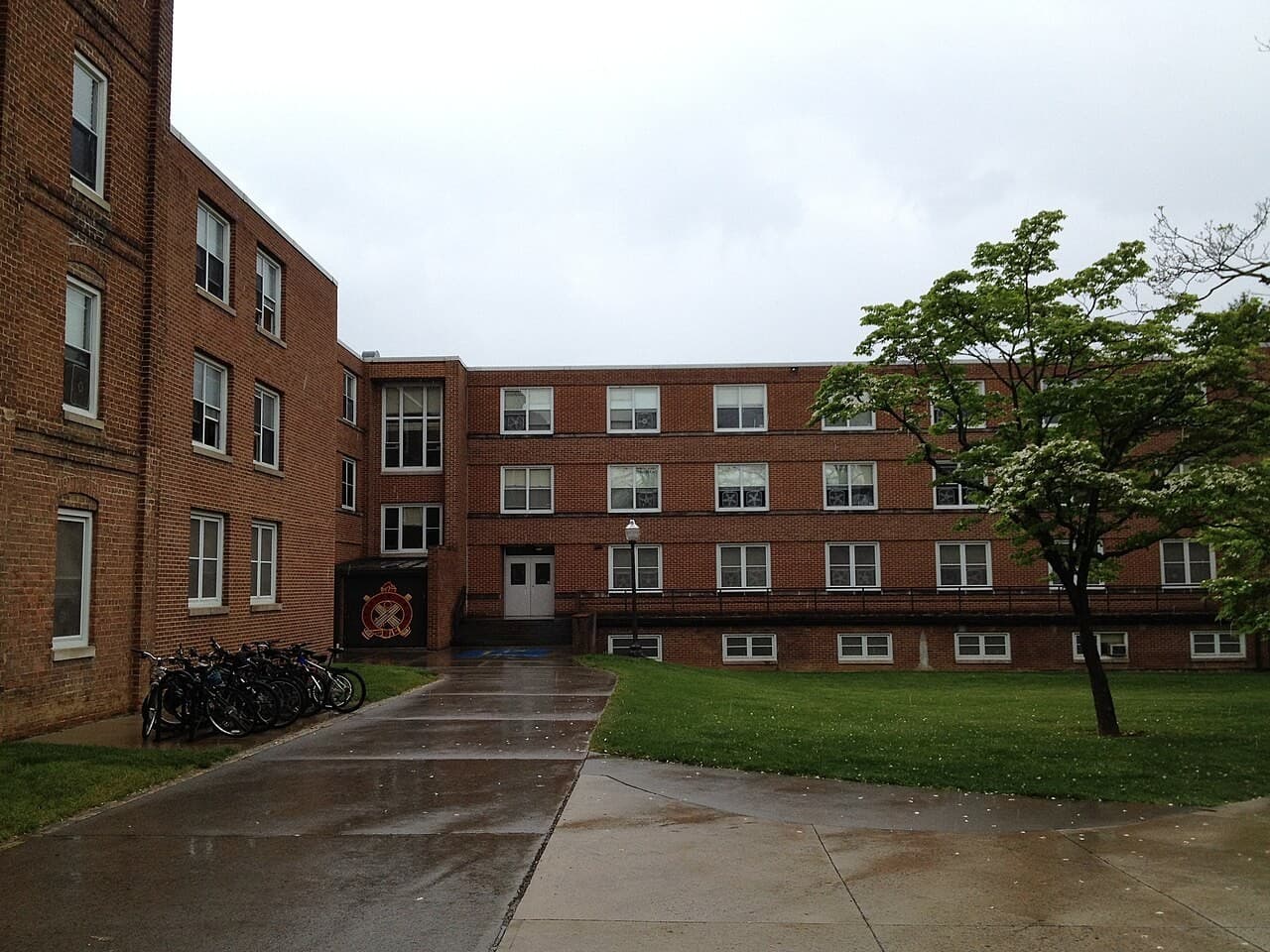
The President’s House, now Henderson Hall, was finished in 1876. Barracks No. 1, now Lane Hall, followed in 1888 for about $20,000: three stories of brick in the Second Empire style, with a central tower that held a 5,000-gallon water tank. Four more brick barracks went up around it between 1894 and 1904.
Not everyone loved the look. Virginia Tech says leaders of the era thought the campus resembled cotton mills and shoe factories. President Joseph D. Eggleston, who led the school from 1913 to 1919, put it more bluntly. He said the brick buildings looked like “poverty-stricken mills.”
The first stone
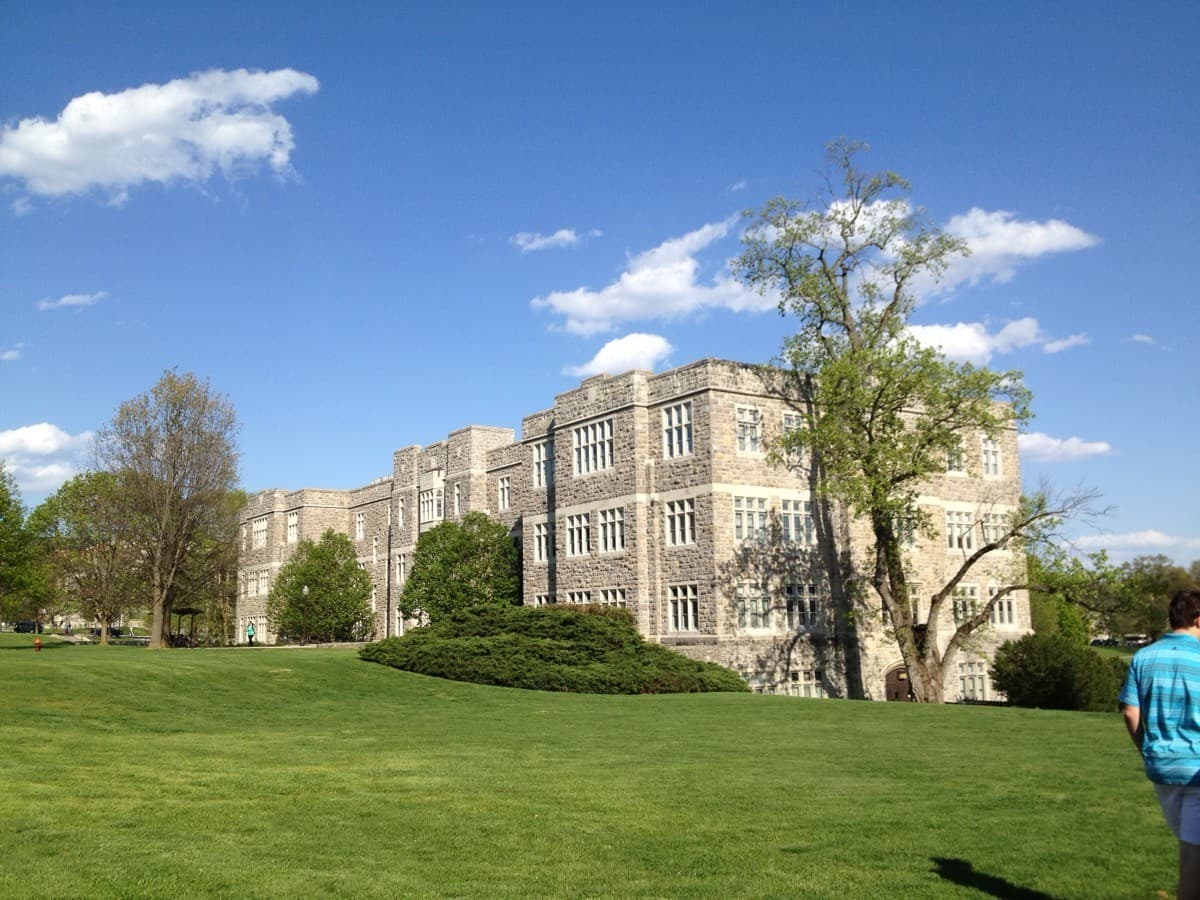
The switch had already started by then, under President John M. McBryde. The first building of native limestone was the YMCA, designed in the Romanesque style by Richmond architect W.F. West. Its cornerstone was laid June 20, 1899, and it was finished in the summer of 1901. You know it today as the College of Liberal Arts and Human Sciences Building.
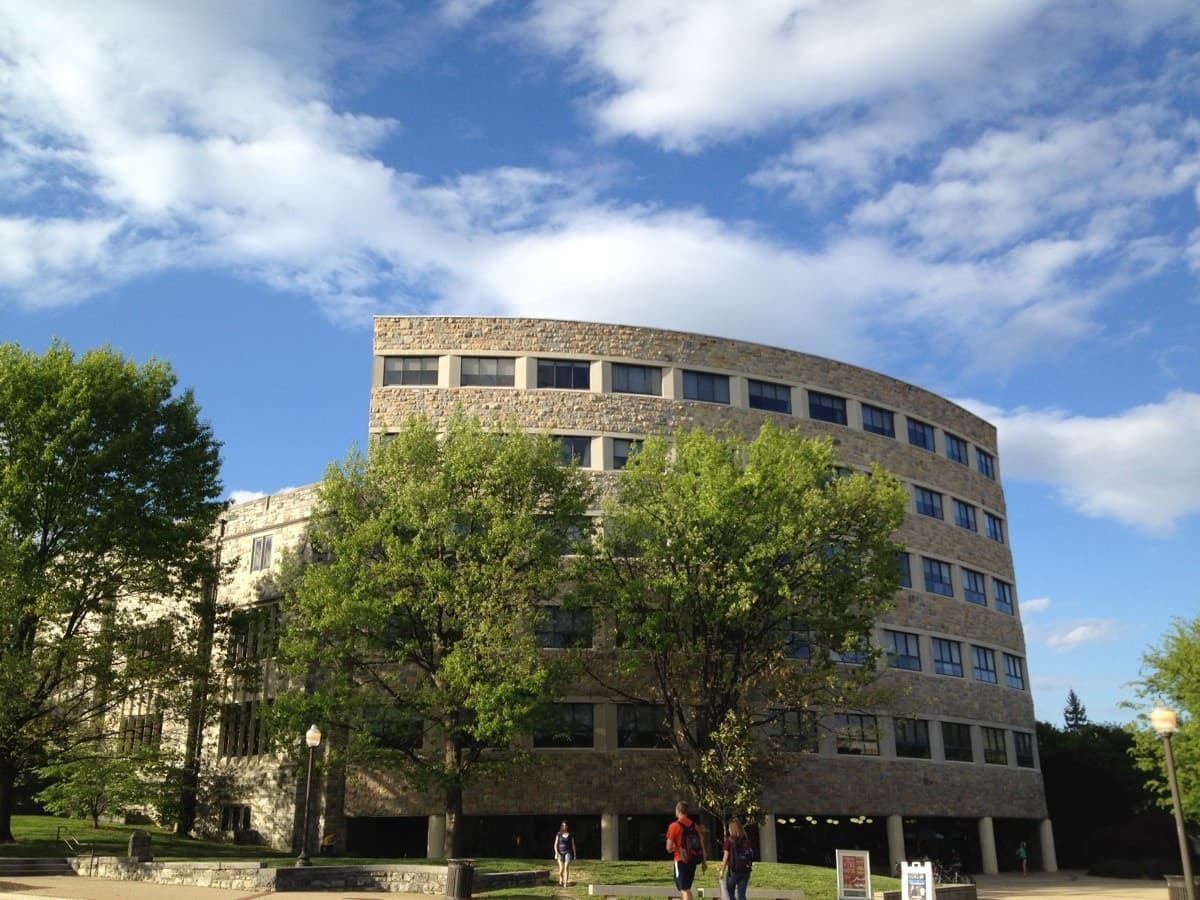
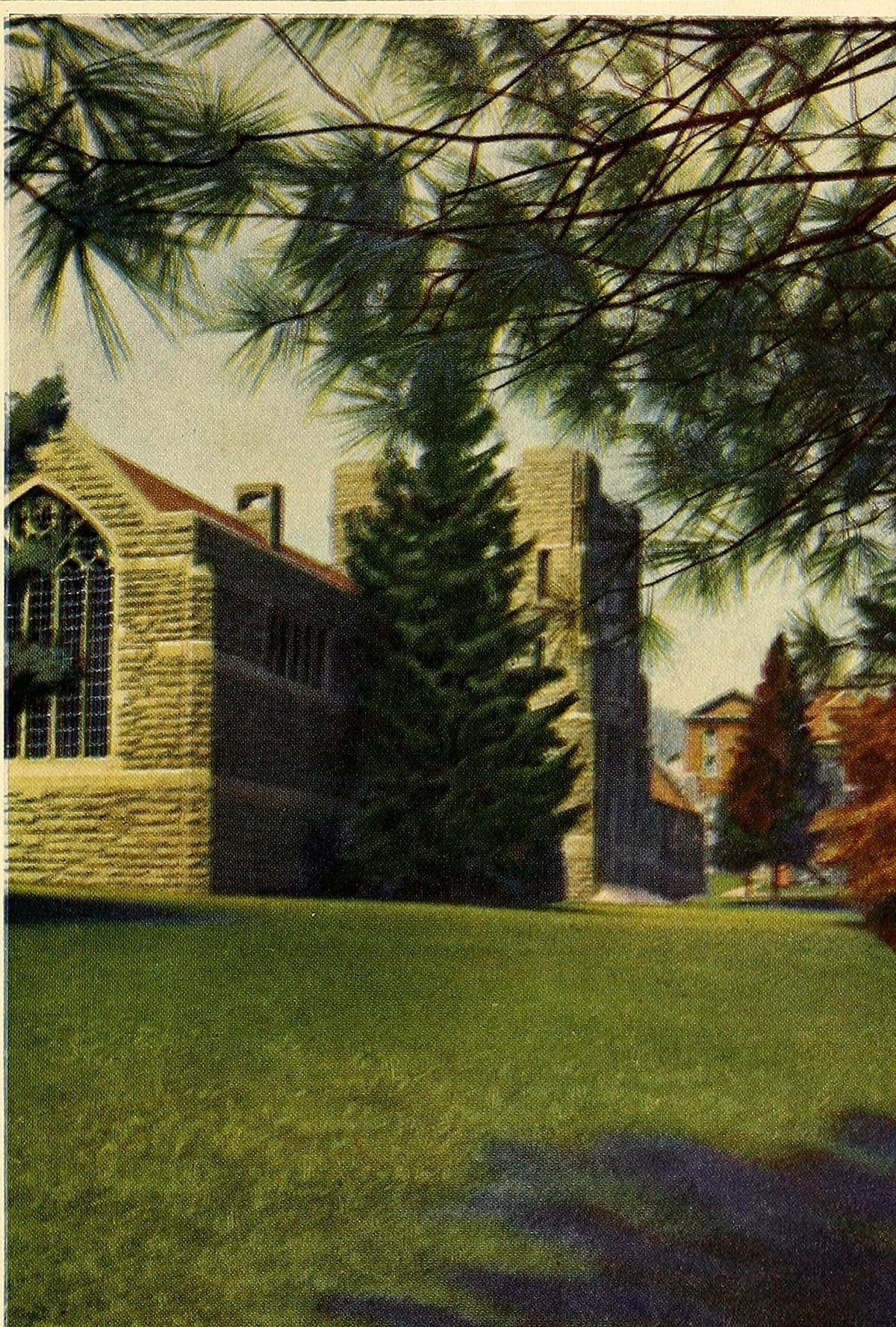
Next came the Chapel, completed in May 1905 with limestone from the college’s own quarry. Virginia Tech calls it the campus debut of neo-Gothic. It seated 1,300, had terrible acoustics, earned the nickname “Dutch Barn,” and later became the library. It burned in 1953 while it was being torn down. Newman Library stands on the spot.
Why stone instead of brick? It depends who you ask. Virginia Tech says the Chapel was planned in brick until bricks were unavailable. Wikipedia credits a World War I brick shortage for the stone on the first McBryde Hall in 1914. Either way, the stone stuck.
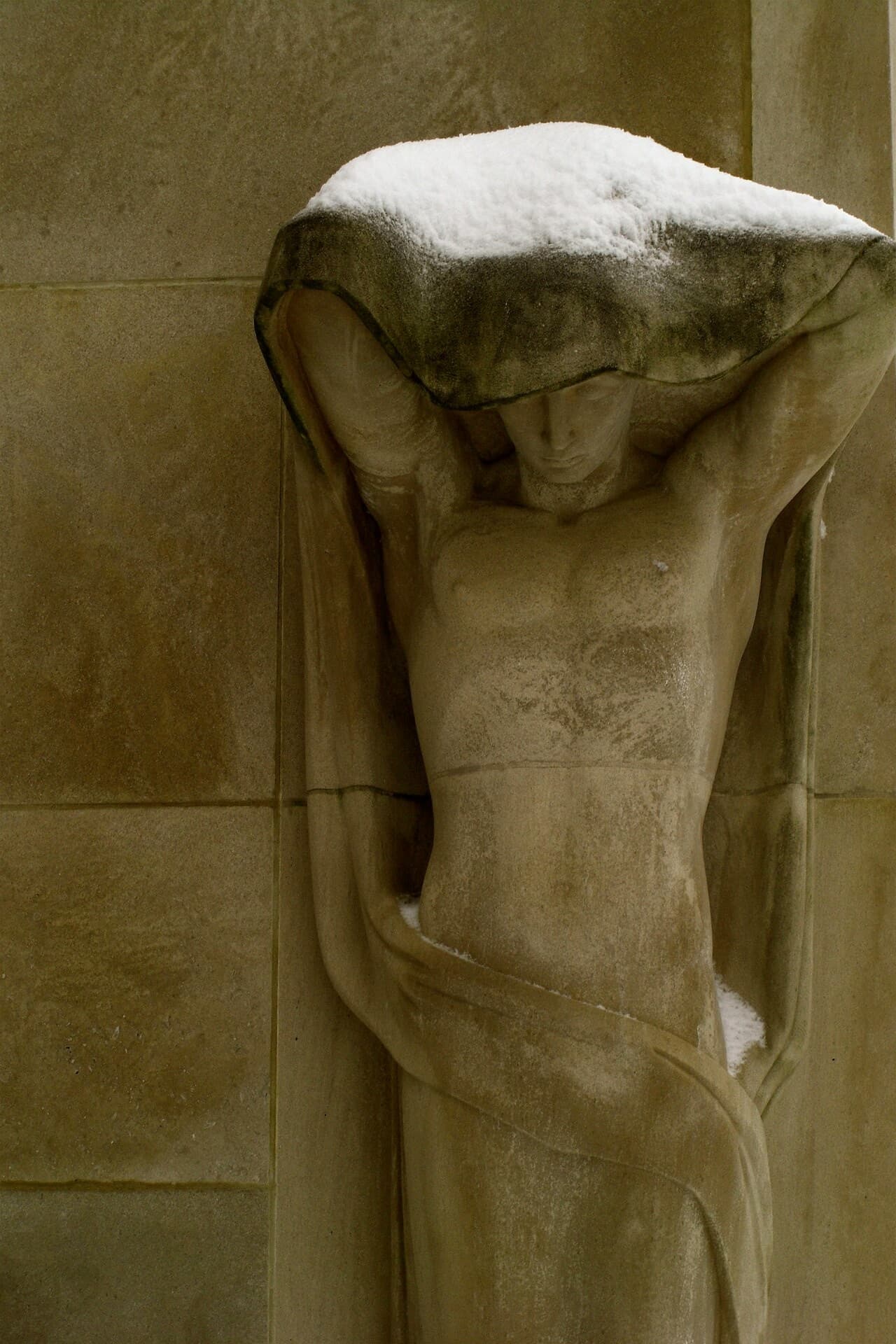
That first McBryde Hall matters most. Virginia Tech calls it the first building designed in both neo-Gothic style and native limestone, the template for everything that followed. It came down in 1966, but its facade sculptures still line the walkway at the west end of today’s McBryde Hall.
Burruss makes it a rule
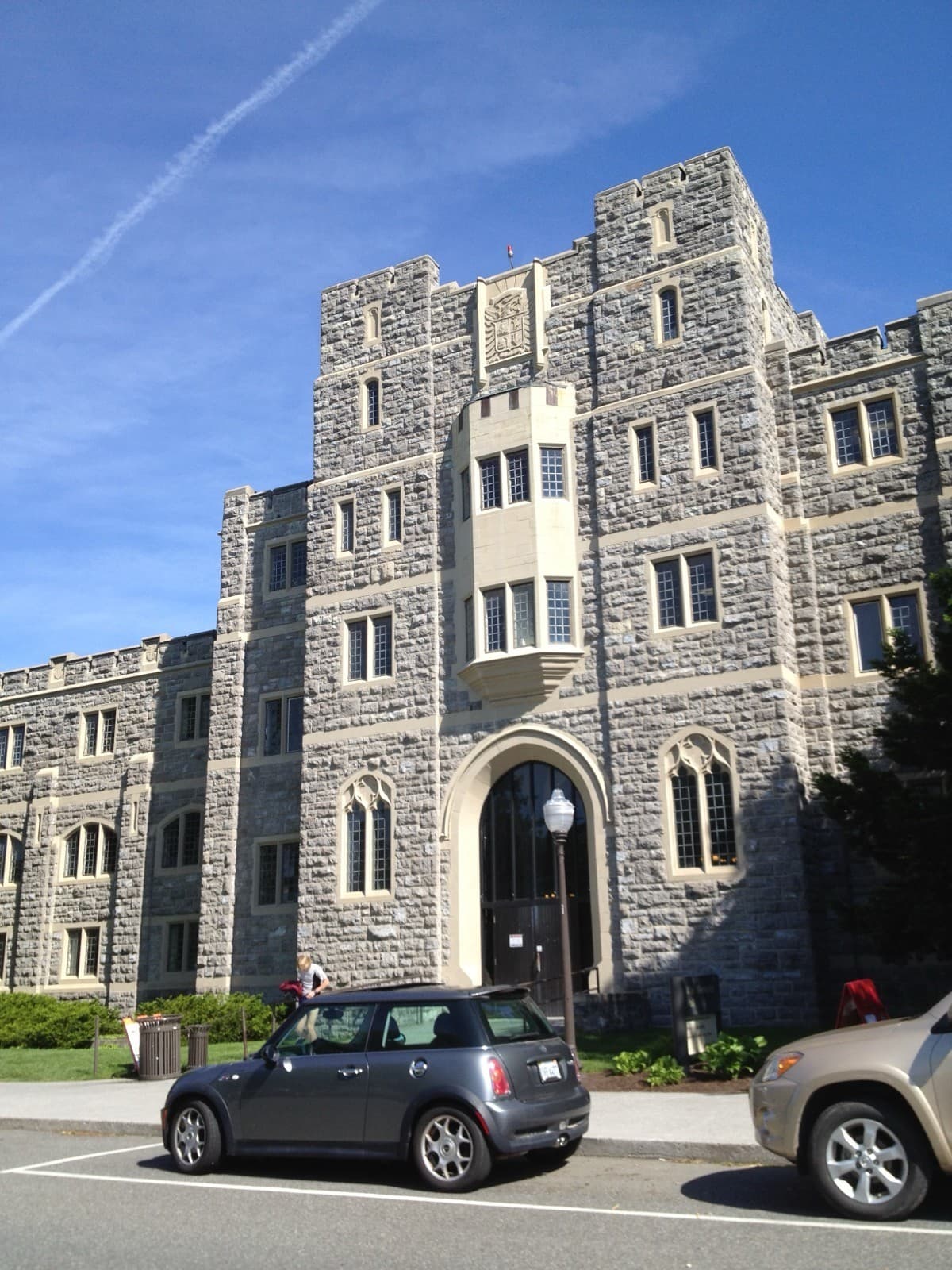
In 1922 President Julian Burruss decided that every new building around what would become the Drillfield would have a limestone exterior. By that fall, crews were quarrying stone for the purpose. In 1925 he described the plan as “modified Tudor” buildings with walls of limestone quarried on the campus.
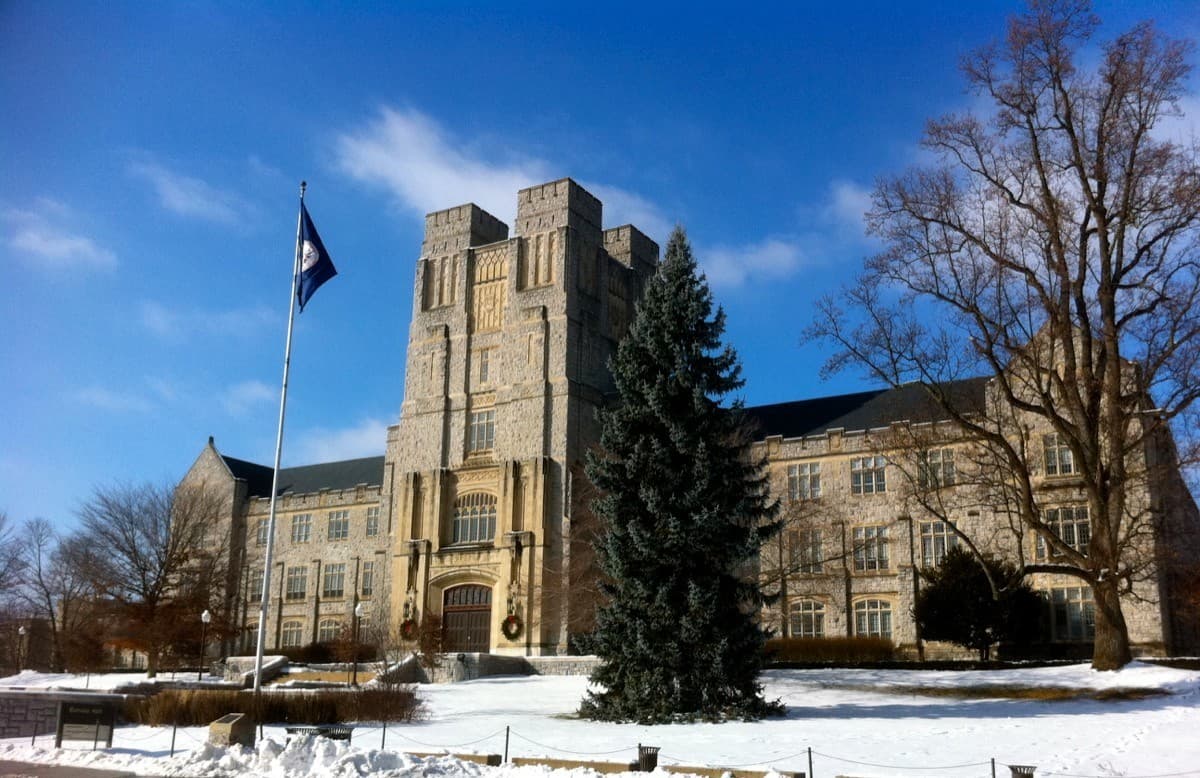
The stone era took off from there. War Memorial Hall was dedicated in 1926, after its construction was slowed by springs on the site and “unexpected competition for building stone.” Burruss Hall followed in 1936. Ten buildings were finished between 1934 and 1940 with federal Public Works Administration grants.
The rule had exceptions. Hillcrest Hall, the first residence built for women, opened in 1940 in Gothic Revival style but clad in red brick.
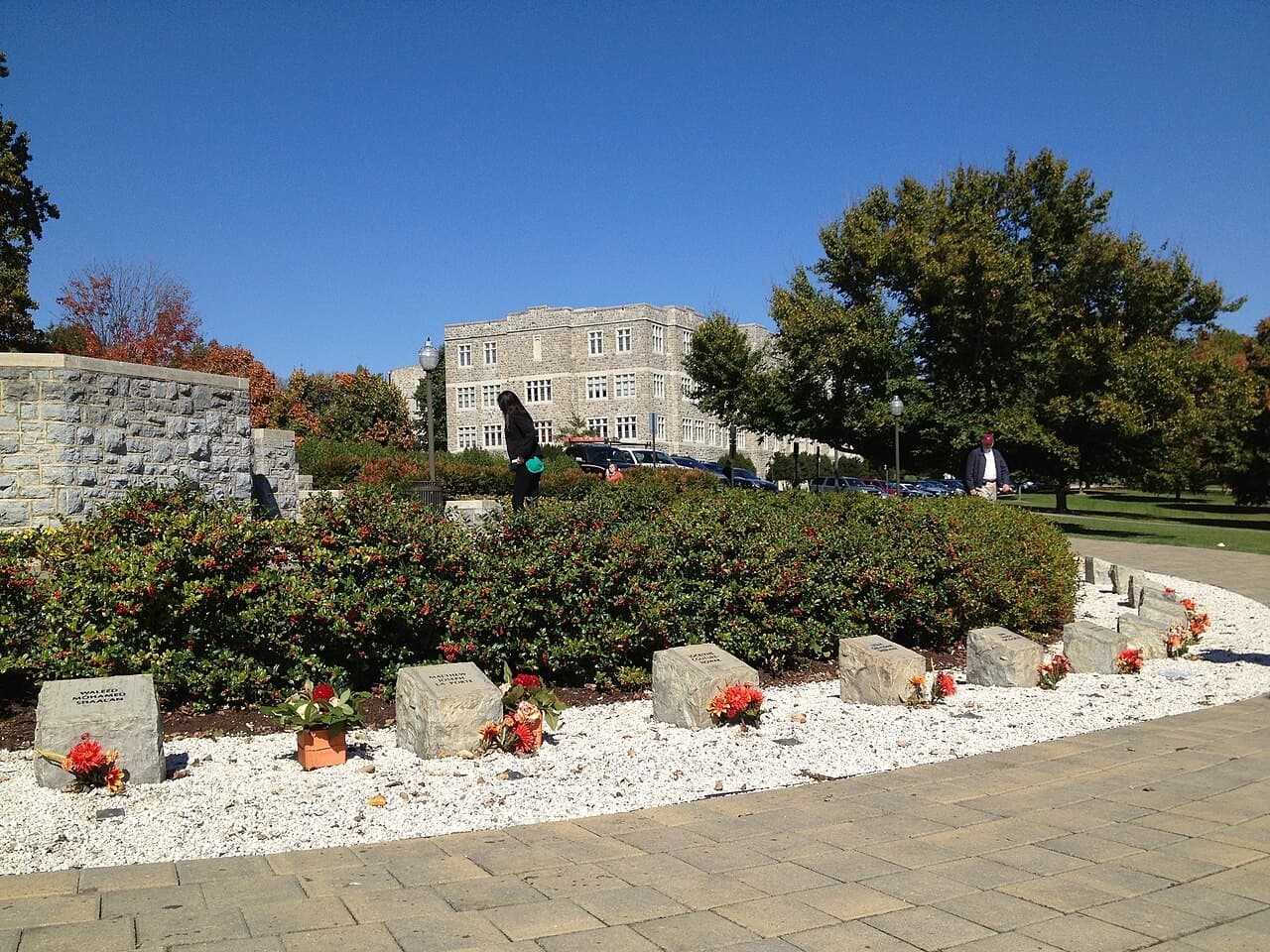
And not every stone on campus is Hokie Stone. The eight War Memorial pylons, finished in 1960, are Indiana limestone.
The concrete break
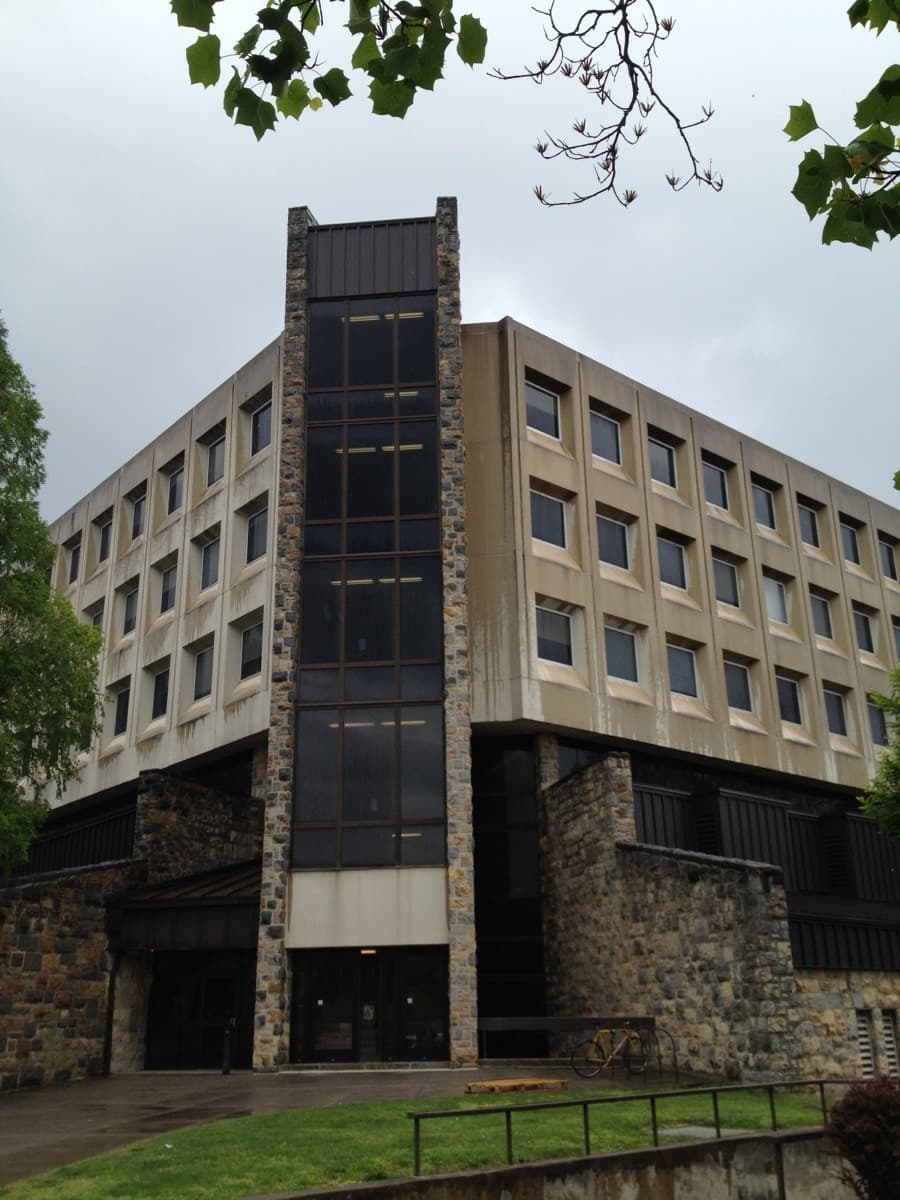
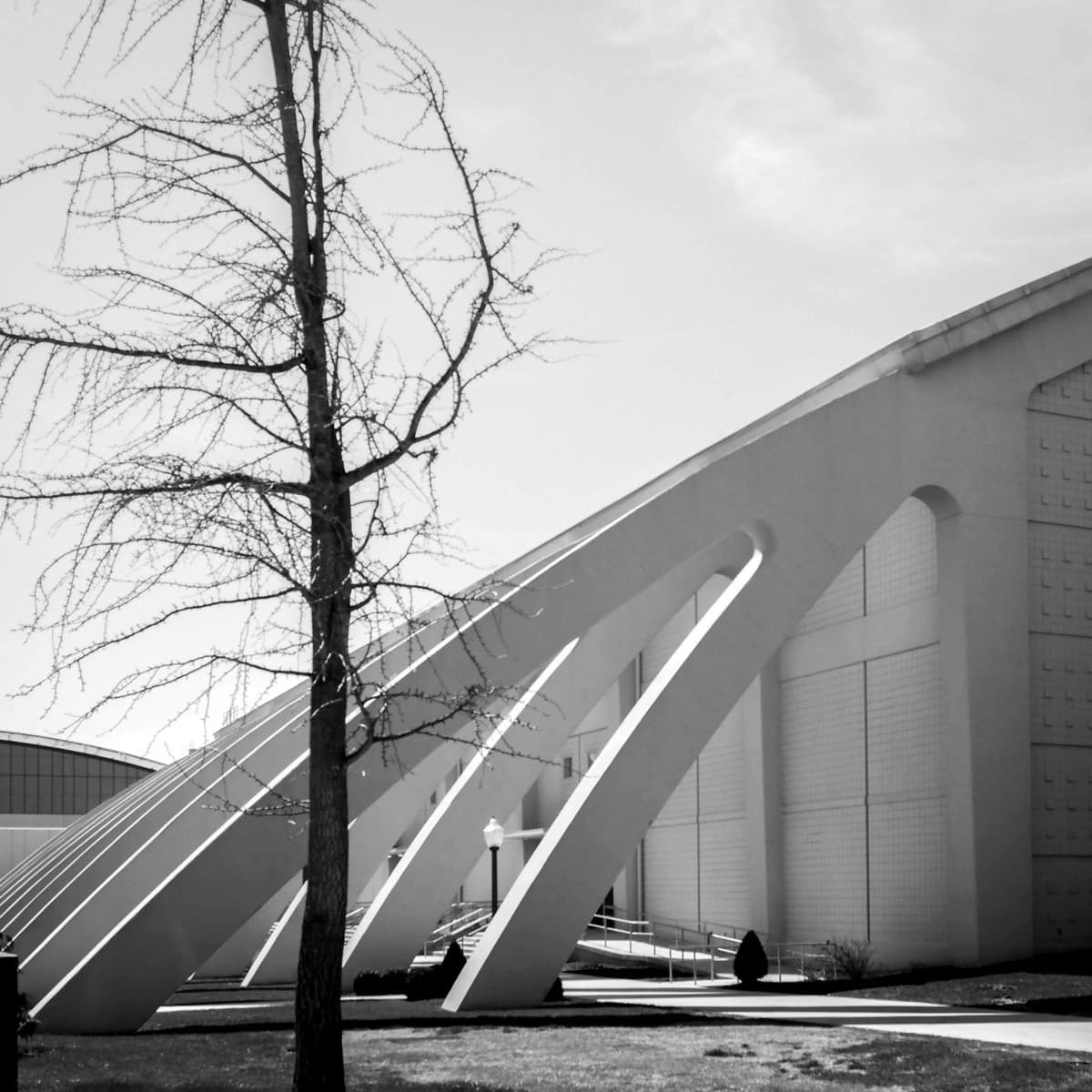
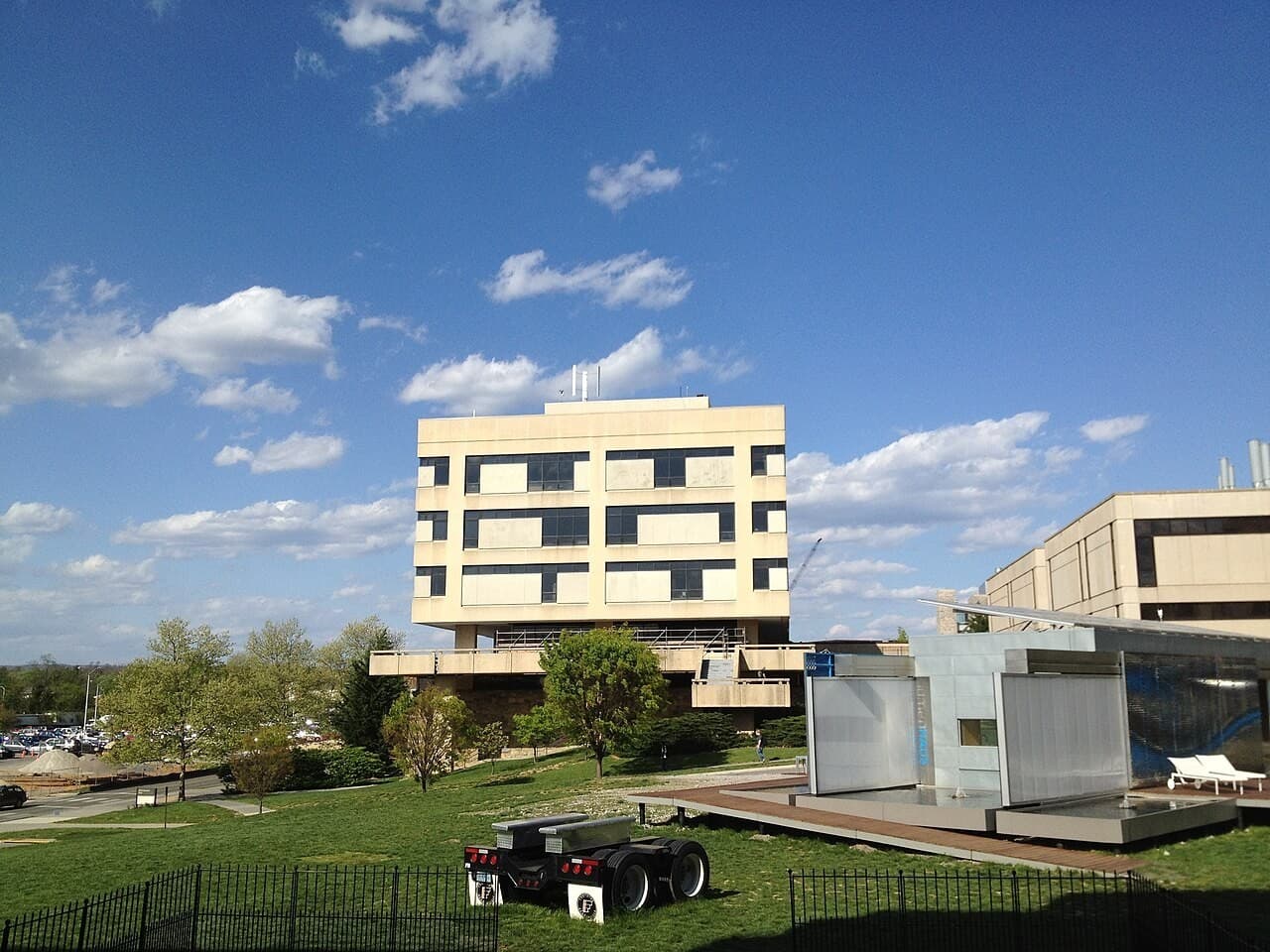
Then the country went modern, and Tech went with it. Virginia Tech dates a brief break to the late 1960s and early 1970s. Its examples are Cassell Coliseum and Cowgill, Whittemore and Derring halls.
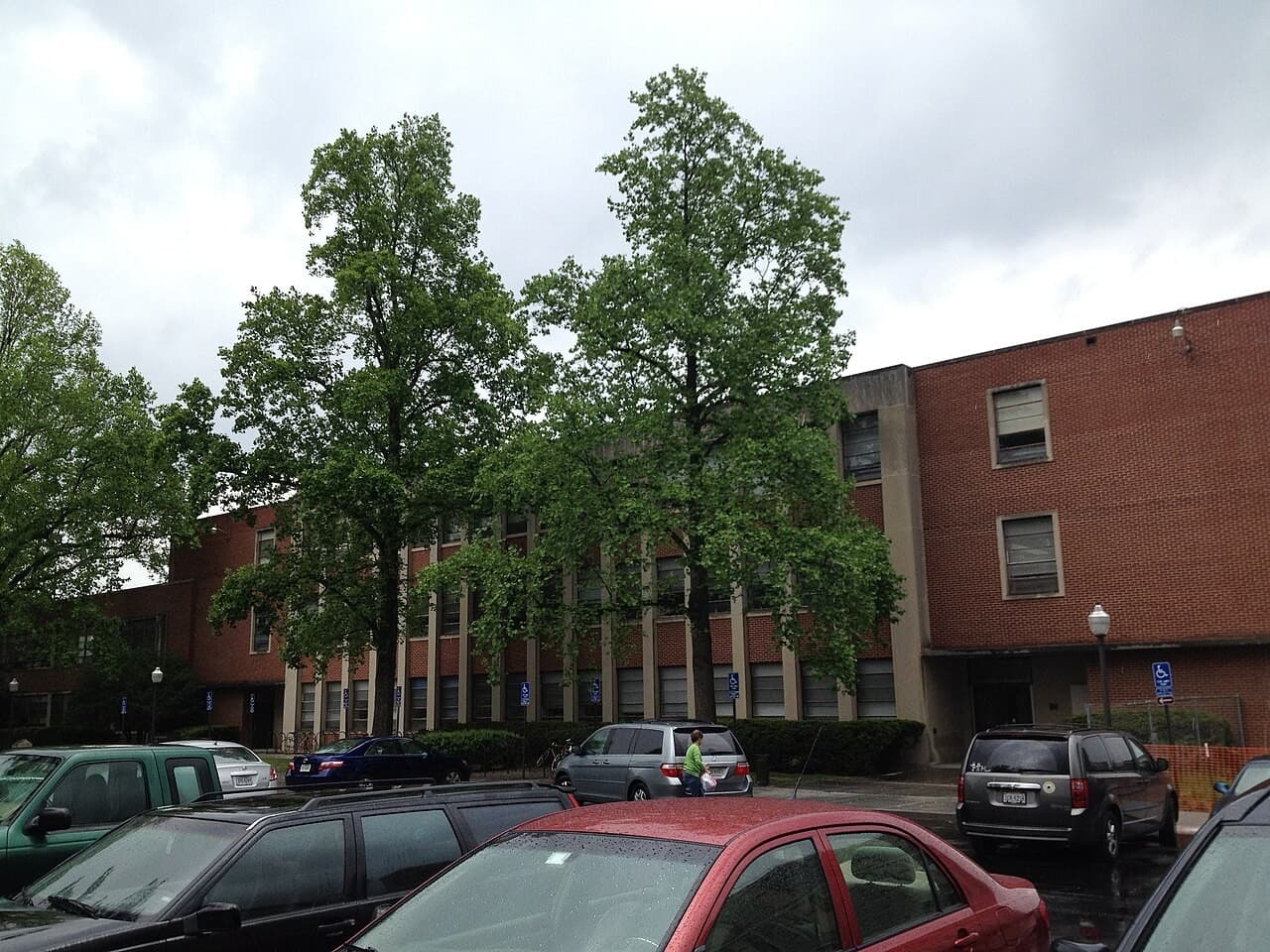
Derring is the best joke on campus. It is home to the geology department, it has no Hokie Stone, and it sits on the site of the original campus quarry, which closed in 1953. The people who study rocks work in the one spot where Tech’s first stone was cut, in a building that skipped it.
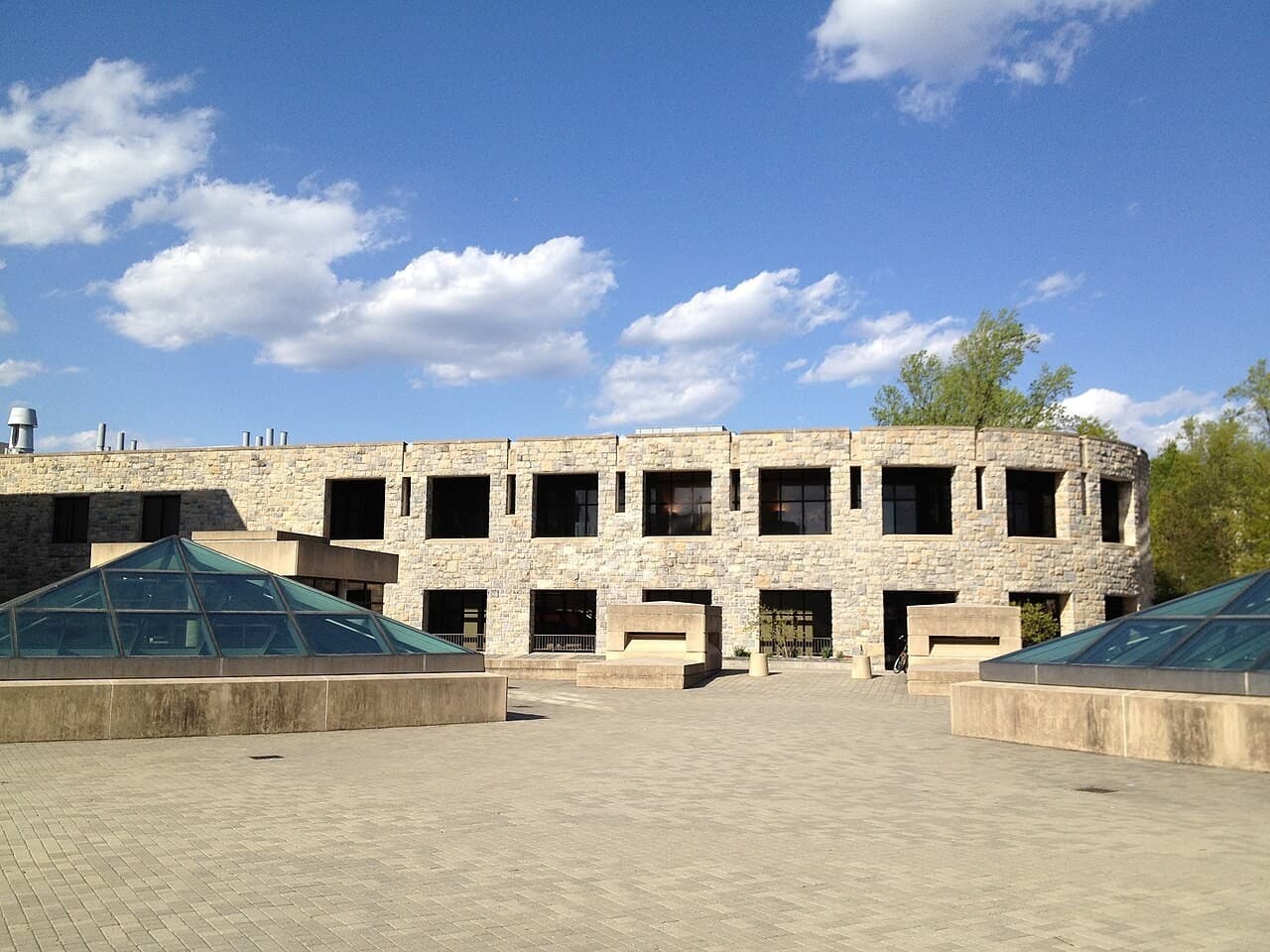
The fight over the look never fully stopped. In 1987 students and faculty protested a proposed Hokie Stone addition to the front of Cowgill Hall. The addition was scrapped. In 1998 Burchard Hall went in under Cowgill Plaza instead, with its pyramid skylights.
The revival, and the rule that made it law
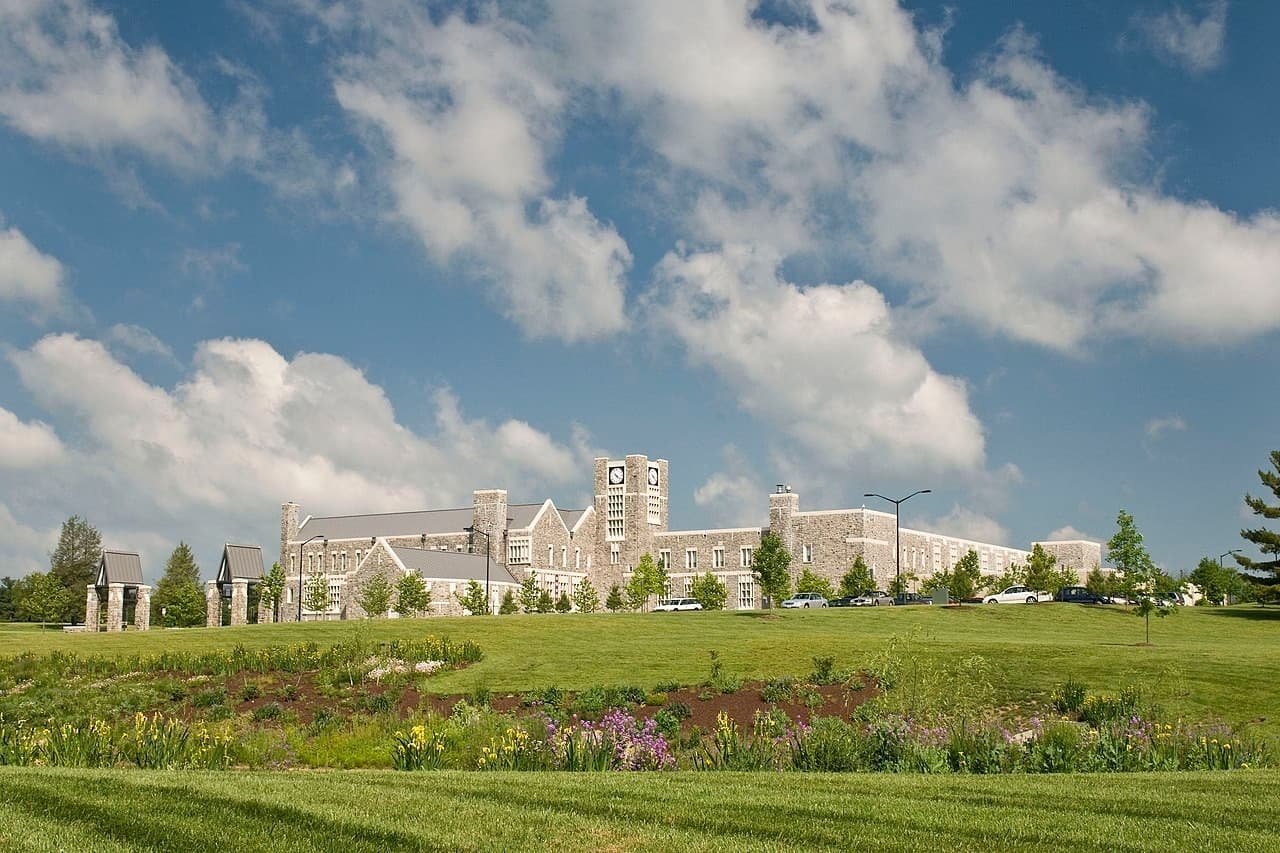
Hancock Hall, finished in 1990 with Hokie Stone walls, was an early return. In the 1990s a Board of Visitors committee said the stone should be used in all buildings on the central campus. In 2010 the full board passed a resolution making that official policy.
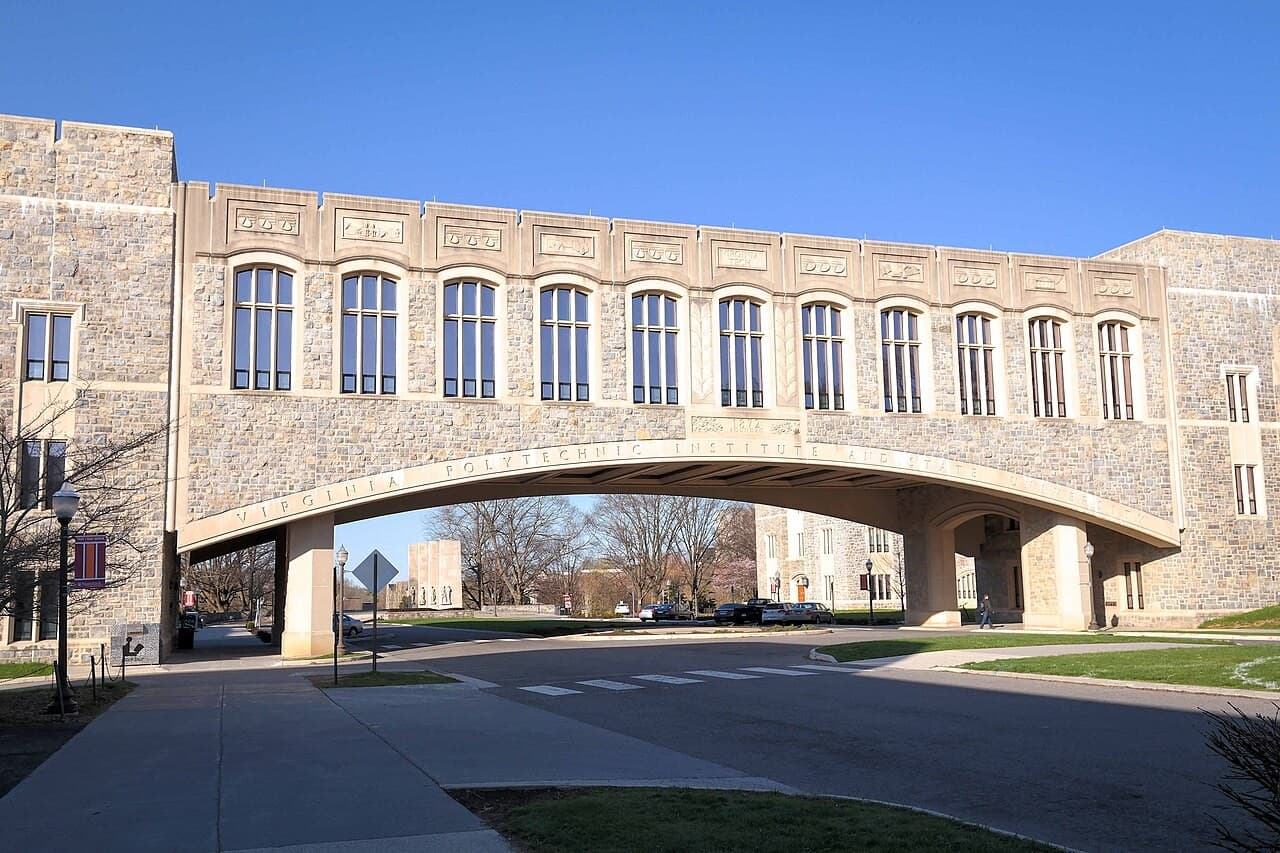
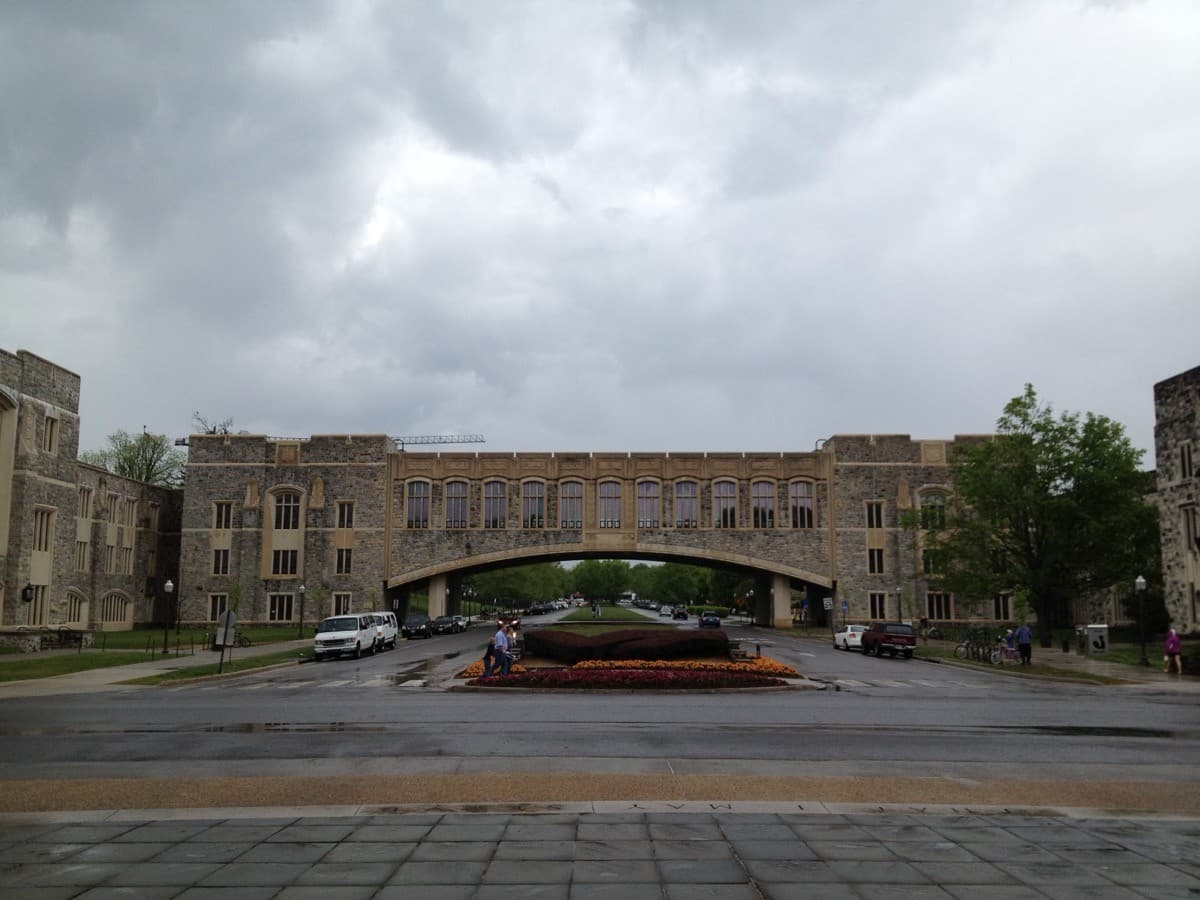
The numbers got big. Torgersen Hall and its bridge over Alumni Mall used about 2,700 tons of stone. The Inn at Virginia Tech and Skelton Conference Center used 2,741 tons, or 82,236 blocks, against about 1,500 tons for a typical campus building. Goodwin Hall’s order took 3,200 pallets, a little more than a year of quarry output.
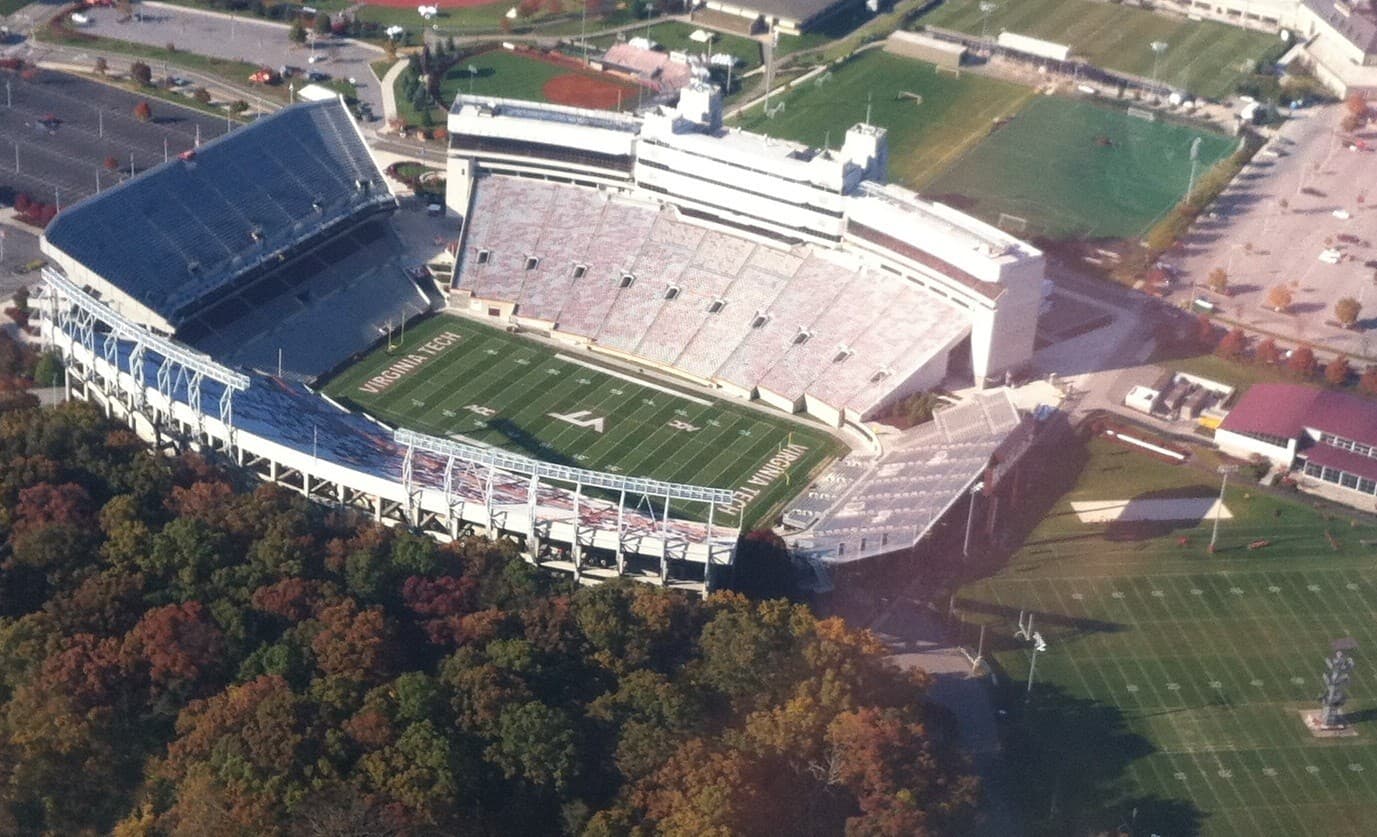
The stone shows up in smaller places too. Football players touch a block of it at the tunnel exit into Lane Stadium. Each building carries a Hokie Stone marker for its namesake.
The biggest stone story now is Mitchell Hall, rising where Randolph Hall stood from 1952 until its 2024 demolition. Norris Mitchell, Class of 1958, and his wife Wendy committed $35 million in December 2021, the largest gift ever by a Virginia Tech alumnus. The design pairs Hokie Stone with precast concrete and glass, and the building is expected to open for fall 2028.
At the time of the gift, the university put the projected cost at $248 million. Later budgets ran higher. Construction Equipment Guide, citing the Roanoke Times, reported a $292 million budget after the General Assembly fully funded the project in 2022.
Where the stone comes from
Hokie Stone is dolomite, a sedimentary rock of calcium and magnesium carbonate, in pinks, reds, grays, browns and black. Its technical name is Chepultepec and Kingsport dolomite. Virginia Tech says the pink stone was bleached in a dry, desert-like climate and the dark gray and black formed in swampy, wetter conditions. It was first called simply “our native stone.”
Today it comes from a 40-acre university quarry a few miles from campus near Blacksburg’s Highland Park neighborhood, which supplies about 80 percent of campus stone. The quarry is surrounded by houses, so the crew blasts with black powder to keep the dust and noise down. Virginia Tech says the other 20 percent, the dark stone that keeps facades varied, comes from a farm quarry at Lusters Gate in Montgomery County.
How much comes out? Virginia Tech says about 50 tons a week. In 2017, WSLS reported 60 pallets a week at 2,300 pounds each. That works out to 60 x 2,300 = 138,000 pounds, or 69 tons, as the crew ramped up for new buildings.
One ton covers about 35 square feet of wall, and each mason shapes about a ton a day. Do the math on Torgersen and you get roughly 2,700 x 35 = 94,500 square feet of wall. That is a lot of hand-shaped rock.