Since 1928
Left Open Forever
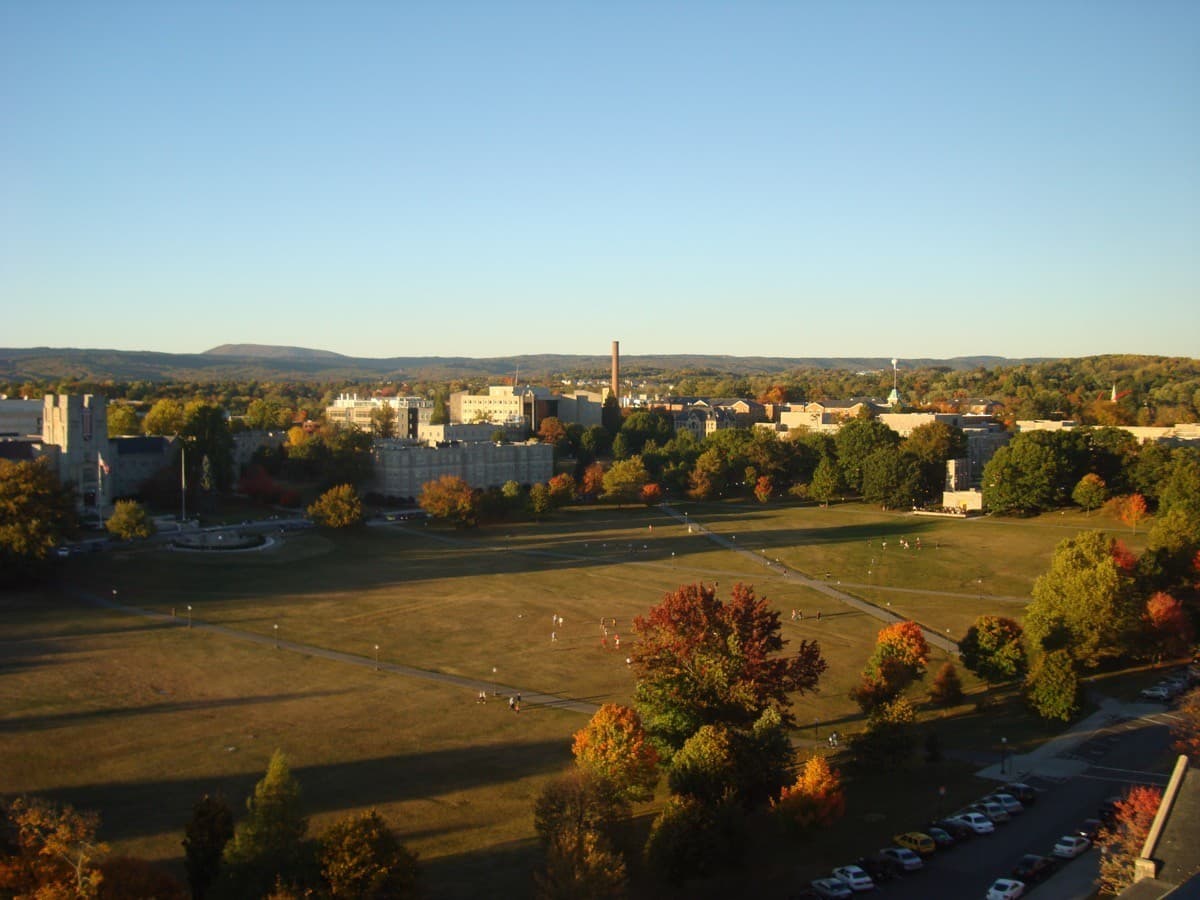
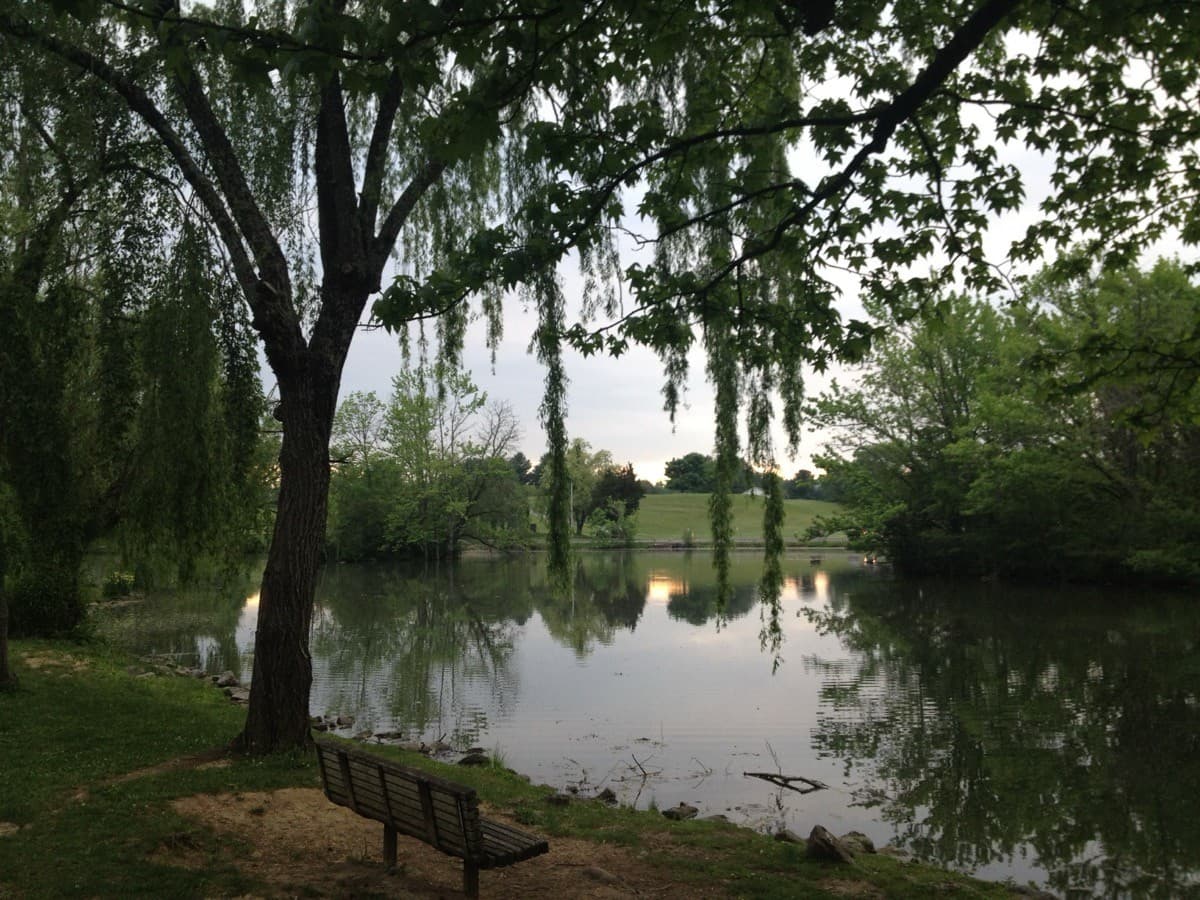
The Drillfield looks like it was always there. It was engineered: a creek valley piped, graded and promised to stay open. The creek comes back up at the Duck Pond.
- 1872The college buys about 250 acres and the Solitude house for $21,250.
- 1880An upper Ice Pond is built; it supplies ice until 1898.
- 1907Landscape architect Warren H. Manning first works on the campus.
- 1913Student Bernard H. Fowle proposes the Duck Pond in his thesis.
- 1926The name “Drillfield” is coined after Miles Stadium is finished.
- 1928Grading wraps up: 27 acres leveled to a 1 percent slope over a piped creek.
- 1937Stroubles Creek is dammed and the Duck Pond is complete.
- 2011Solitude is restored to its 19th-century look.
- 2018The Board adopts the Sasaki 30-year campus master plan.
- 2019The Fraction Family House at Solitude is renamed.
A field meant to stay empty
Every Hokie has crossed the Drillfield in a wind that felt personal. It is easy to assume it was always a big open lawn. It was not. It was planned, and the planners meant it.
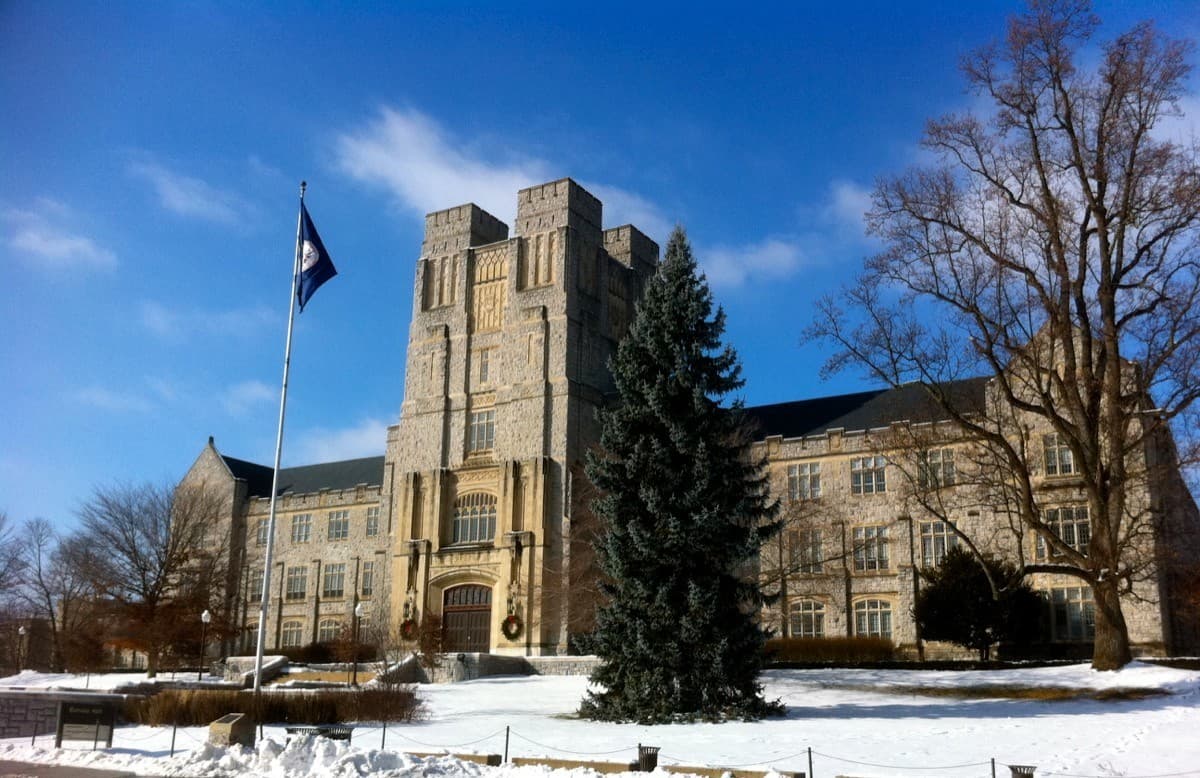
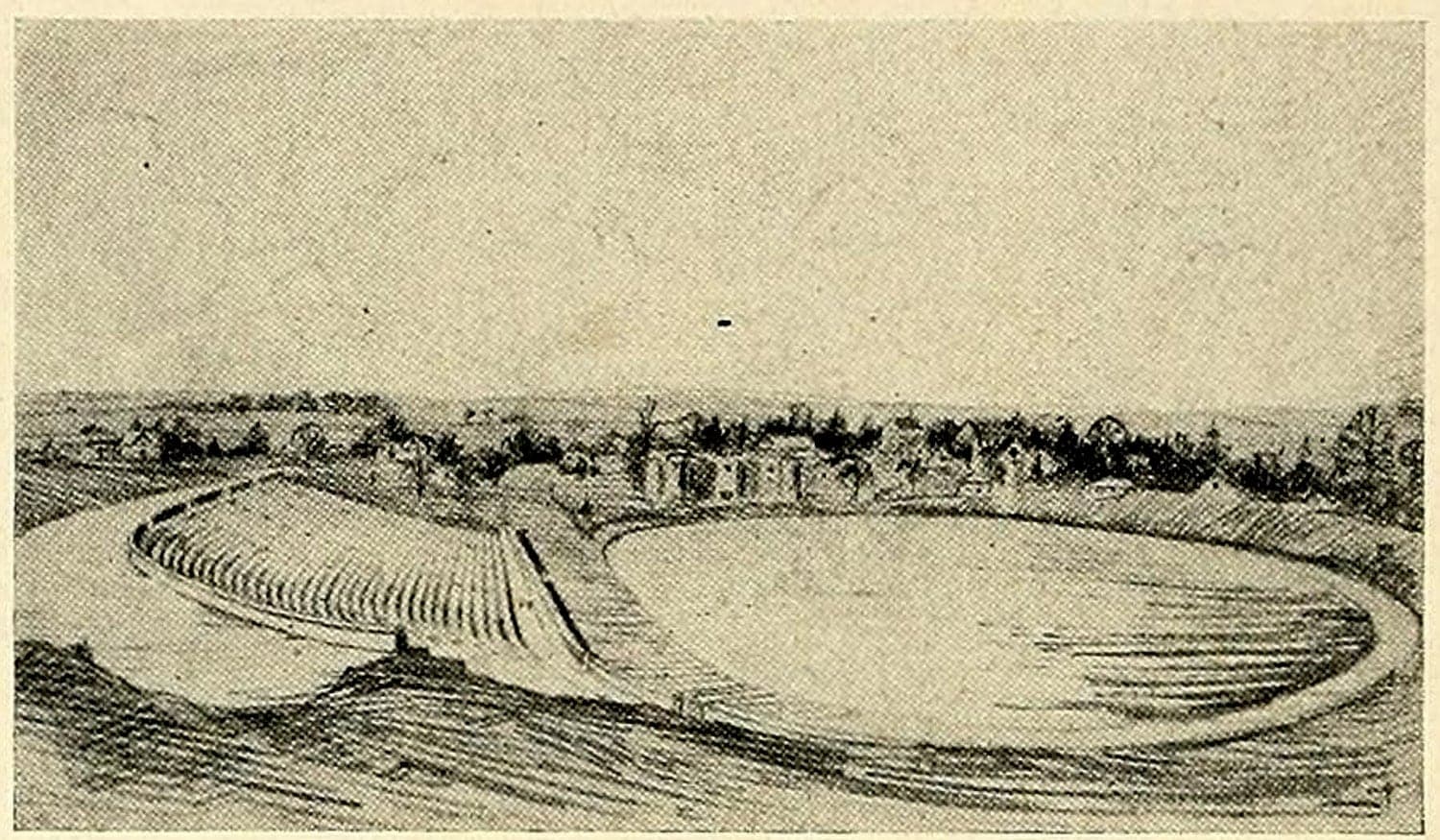
President Julian Burruss described a central recreation and drill field about three times the size of the old athletic field. It was to “be left open forever.” That line is the whole idea of the place.
The cadets had drilled elsewhere first. The original drill field sat north of the First and Second Academic Buildings, and it moved behind Barracks No. 1 after 1888.
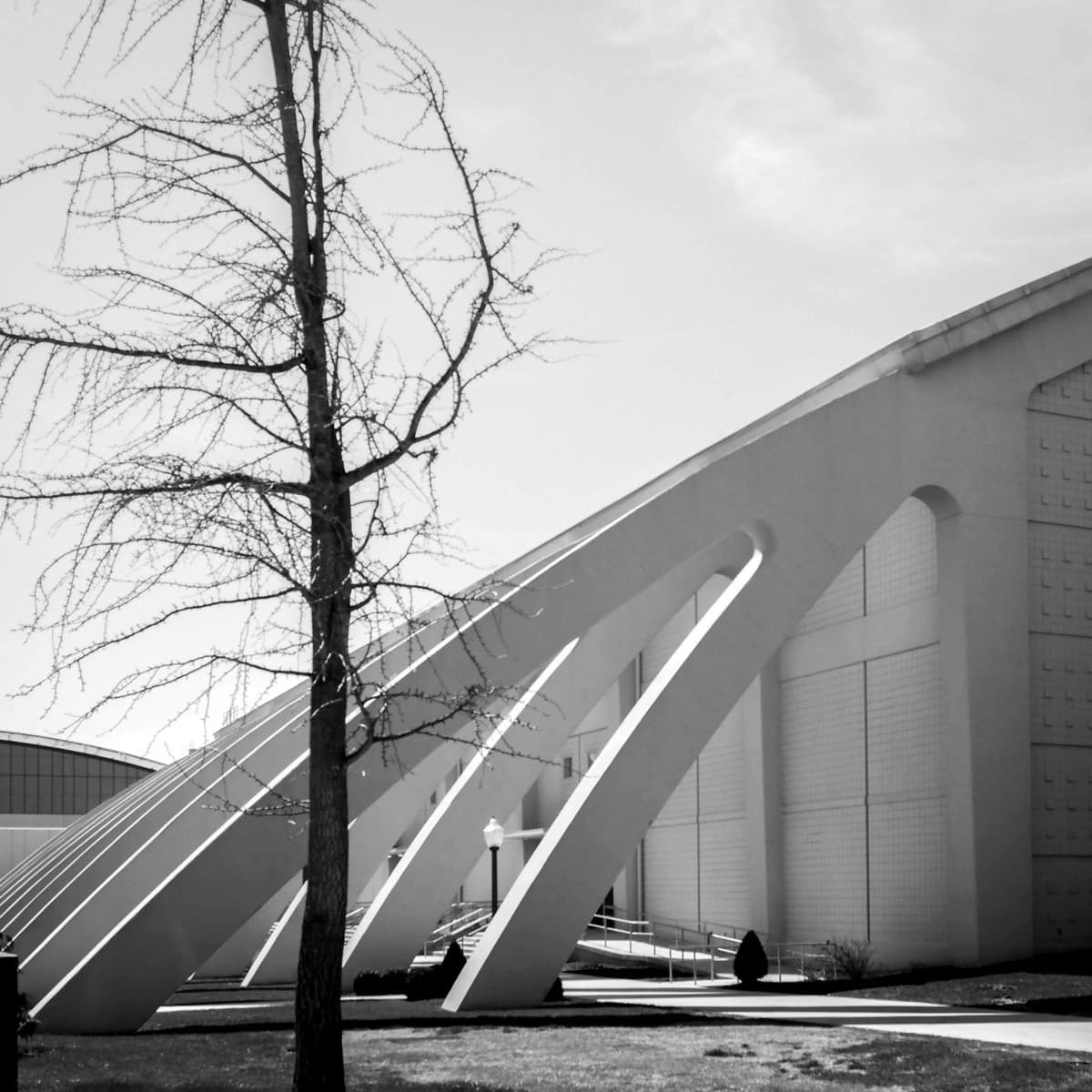
Boston landscape architect Warren H. Manning first worked on the campus in 1907. His firm’s 1925 maps, shown to the Board in April 1926, name a “Parade Ground” oval. A 1986 state survey credits Ambler Johnston with the first campus master plan, which set the line running from Miles Stadium through War Memorial Gym to Burruss Hall. Wikipedia says the name “Drillfield” was coined in 1926, after Miles Stadium was finished.
Moving a creek to make a lawn
Building today’s Drillfield took from 1927 to the fall of 1928. According to Virginia Tech Special Collections, part of Stroubles Creek was rerouted into a concrete culvert, 4 feet by 8 feet and more than 500 feet long.
Then the crews leveled it. They graded 27 acres to a 1 percent slope by moving about 70,000 cubic yards of earth. Roughly 12 acres were cut 3 to 4 feet deep, and that material was spread over the neighboring 15. That is 12 + 15 = 27 acres, all of it reshaped.
You may have heard the Drillfield sinks an inch a year. Wikipedia calls that an urban legend with no basis.
What is really under there is plumbing. Nearly 90 percent of campus buildings connect to the power plant through underground tunnels, and their main access is on the Drillfield.
The creek underneath
Stroubles Creek runs about 12 miles through Blacksburg and campus to the New River. Two springs north of town feed its Webb and Central branches. The Central Branch runs under downtown and under the Drillfield, then comes back above ground at the Duck Pond.
Water shaped this campus from the start. Early campus water came from three springs, including the Quarry Spring near today’s Derring Hall. A 110-foot water tower called “the Tank,” holding 50,000 gallons, stood near today’s Cassell Coliseum from 1897 until 1957. Classes painted their numerals on it.
The land here is karst, with limestone, sinkholes and springs. That is the same limestone country that gave Tech its building stone.
A thesis that became a pond
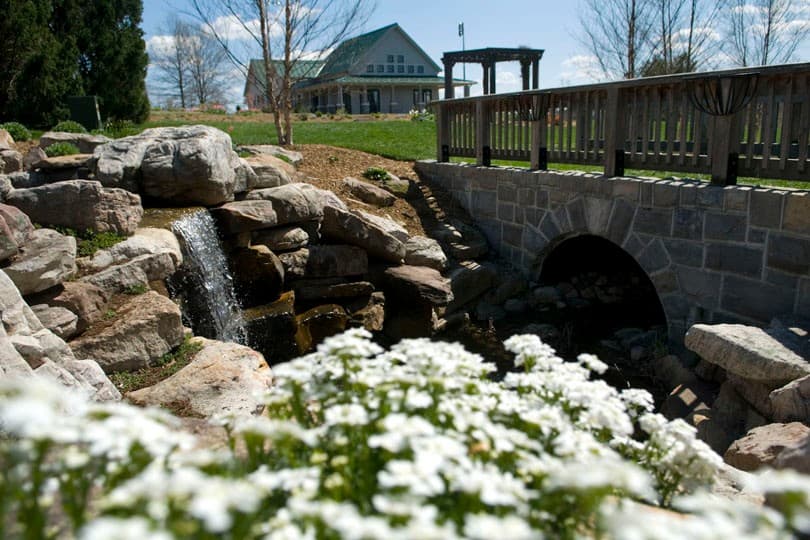
The Duck Pond began as homework. In 1913 a civil engineering student named Bernard H. Fowle proposed it in his undergraduate thesis. Special Collections says the lower pond was completed in 1937 by damming Stroubles Creek as part of the modern Drillfield work.
That is 24 years from idea to dam. Not every source agrees on the finish year, but the Special Collections record, the most authoritative of them, says 1937.
It was not the first pond on campus. An upper Ice Pond, built in 1880, supplied ice until 1898 and was later used for skating.
Near the Duck Pond, on a bridge close to the original Draper’s Meadow site, sits a memorial to the 1755 Draper’s Meadow massacre.
Solitude, the oldest thing on campus
In 1872 the Board of Visitors bought about 250 acres, a house and several farm buildings for $21,250. The house was Solitude, and Virginia Tech calls it the oldest structure still standing on campus, believed to be more than 200 years old.
It is Greek Revival. Col. Robert Preston expanded it in 1851 after inheriting it from his father, Governor James P. Preston. From 1875 to 1886 it served as the college’s first infirmary, when it was known as the “Farm House.”
Solitude closed in the 1990s until money was raised. It was restored in 2011 to its mid-to-late-19th-century look and now houses an Appalachian center. It is on the Virginia Landmarks Register and the National Register of Historic Places.
The oldest place on campus also holds its hardest story. The Fraction Family House, believed built around 1843 as a dwelling for enslaved people, is the estate’s surviving outbuilding. In 2019 it was renamed for the largest of the enslaved families there.
One wording note. Solitude is the oldest structure on campus. Lane Hall, from 1888, is the oldest building the college built itself.
The plan for the next 30 years
In 2018 the Board of Visitors adopted a new campus master plan by the firm Sasaki, a 30-year vision built on the 2016 Beyond Boundaries process. It took more than two years and over 200 presentations and town halls.
Vice President Sherwood Wilson called it “not a blueprint” but a flexible document. Two of its ideas reach right across the Drillfield: “green links,” universally designed north-south paths, and an “infinite loop” planned around campus. Both won a 2021 Society for College and University Planning award for open-space planning.
A century on, the promise holds. The middle of campus is still open, and it is still meant to stay that way.