1953 to today
Admitted, Not Welcomed
The first Black Hokies, the couple on Clay Street who took them in, and the halls that carry their names now.
- 1953Irving Peddrew III enrolls in electrical engineering in September.
- 1958Charlie Yates graduates with honors, VPI’s first Black graduate.
- 1959Matthew Winston and Essex Finney graduate.
- 1961James Whitehurst becomes the first Black student allowed to live on campus.
- 1966The first Black women are admitted.
- 1967Jerry Gaines becomes the first Black athlete on a full scholarship.
- 1969Overton Johnson becomes the first Black academic faculty member.
- 2003Peddrew-Yates Hall is dedicated on March 29.
- 2020Lee and Barringer halls are renamed for the Hoges and Whitehurst.
- 2024Irving Peddrew dies on May 11, at 88.
Why engineering
In 1951 Virginia Tech turned away its first known Black applicant, Everett Pierce Raney, who wanted to study business. Virginia State offered business, so the attorney general advised that Tech could refuse him.
That was the rule of the time. After the 1950 Supreme Court decisions, Virginia had to admit qualified Black applicants to programs Virginia State did not offer. Business was not one of them.
Engineering was one of those programs. That is why the first Black students at Tech were all engineers, and why none of them could switch majors.
Irving Peddrew III
In September 1953, Irving L. Peddrew III enrolled in electrical engineering. He was the first Black student admitted to a historically white, four-year public institution in any of the 11 former Confederate states. Tech admitted him before any court required it, more than half a year before Brown v. Board of Education.
That first year he was the only African American among 3,322 students.
He was admitted, but not housed. The college classified him as a “day military student,” a status normally given to married cadets, so he had to live and eat off campus. He boarded with Janie and William Hoge on Clay Street.
He said he felt part of the team during Corps drills, and classmates told him they would room with him if they were allowed. Under social pressure, he skipped the 1956 Ring Dance. He left before his senior year, after a YMCA trip to the West Coast.
He built a career in business in San Francisco and Los Angeles, then worked at Newport News Shipbuilding and Hampton University, and retired in 1994.
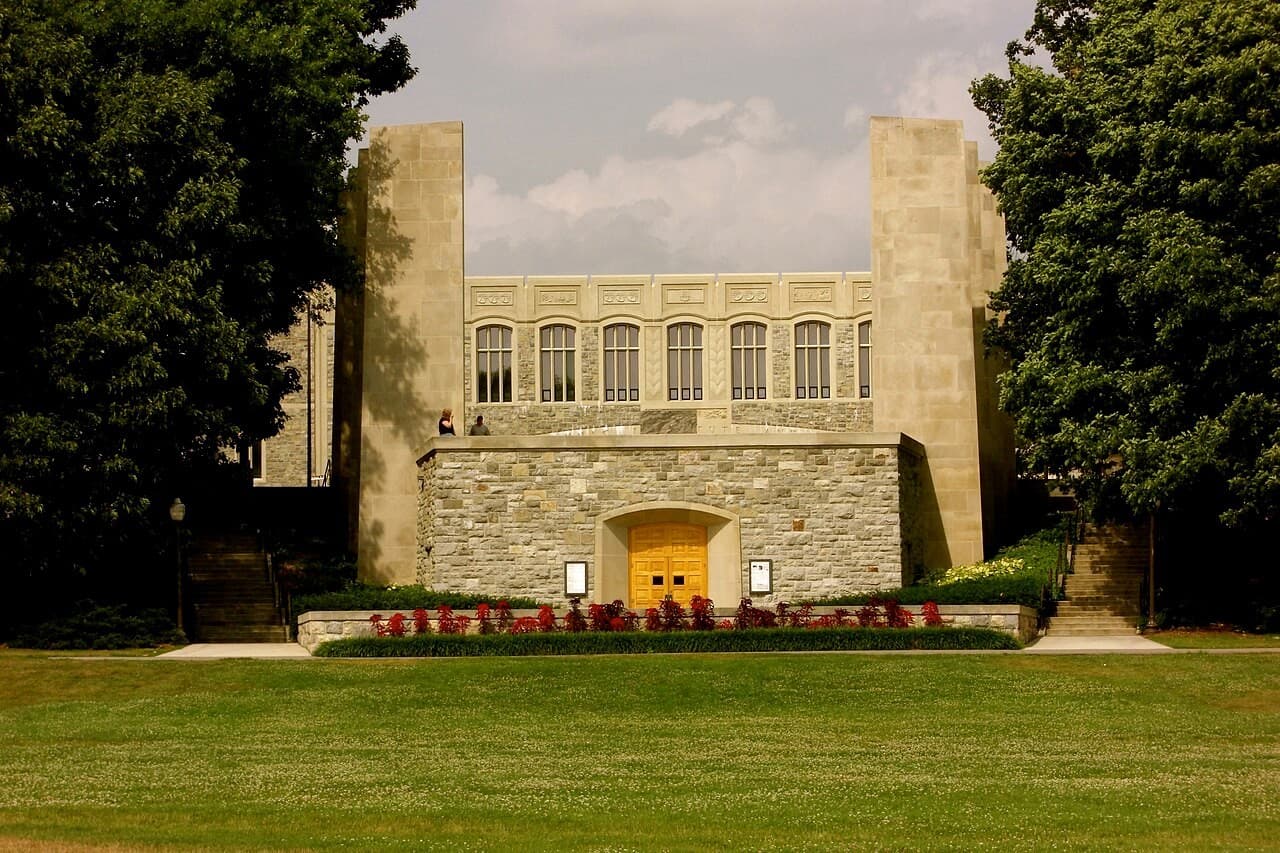
In 2016 he became only the ninth person to receive an honorary degree from Virginia Tech, a bachelor’s in engineering. The Class of 2023 named its ring for him. He died on May 11, 2024, at 88, and a memorial wreath was placed in War Memorial Chapel four days later.
Yates, Winston and Finney
In 1954 Tech admitted three graduates of Booker T. Washington High School in Norfolk to engineering and the Corps: Lindsay Cherry, Floyd Wilson and Charlie Yates. Wilson left after a year for the Air Force. Cherry withdrew after three years.
Charlie Yates stayed. He graduated in 1958 with honors in mechanical engineering, one of six ME honors graduates and the only African American among 911 undergraduates in his class. He was VPI’s first Black graduate, and the first Black student anywhere in the former Confederacy to spend four years at a historically white school and earn a bachelor’s degree.
He was never allowed to room on campus. In four years he ate one meal there, alone, while standing guard duty in the dining hall as a cadet.
He went on to a master’s at Caltech and a Ph.D. at Johns Hopkins, came back to teach mechanical engineering at Tech in 1979, joined aerospace engineering in 1987 and served a term on the Board of Visitors. The Yates Society, 50 student scholars who talk with prospective students, carries his name.
Matthew Winston enrolled in 1955, and Essex Finney transferred from Virginia State in 1956. Both graduated in 1959. President Newman called Winston in to discourage him from attending his junior Ring Dance, citing “higher ups.” Finney later earned a doctorate and retired from the USDA in 1995.
Of the six Black undergraduates admitted in those first six years, three graduated.
The house on Clay Street
Janie and William Hoge were a local Black couple, both born to formerly enslaved parents. Their home on Clay Street was about a mile from campus.
When the college would not house its Black students, the Hoges did. They took in and fed Peddrew and the engineering students who came after him. Winston, Yates, Finney and Peddrew all walked back to Clay Street in the cold for a hot lunch.
A 1959 photo shows the Hoges standing with Essex Finney in his cadet uniform on his graduation day.
James Whitehurst and Lane Hall
James L. Whitehurst Jr. entered in 1959. He had been a high school football star and was told he could not play.
After his sophomore year he demanded a room on campus. Tech gave him an entire bay of Lane Hall. In 1961 he became the first Black student permitted to live on campus.
President Newman asked him to stay away from his junior Ring Dance. He went anyway, and when he stepped onto the floor, his classmates cheered.
He graduated in 1963, flew fighters for the Air Force in Vietnam, became a major in the Air Force Reserve and practiced law in Richmond. He was the first Black member of the Board of Visitors. He died in 2013.
The names on the halls
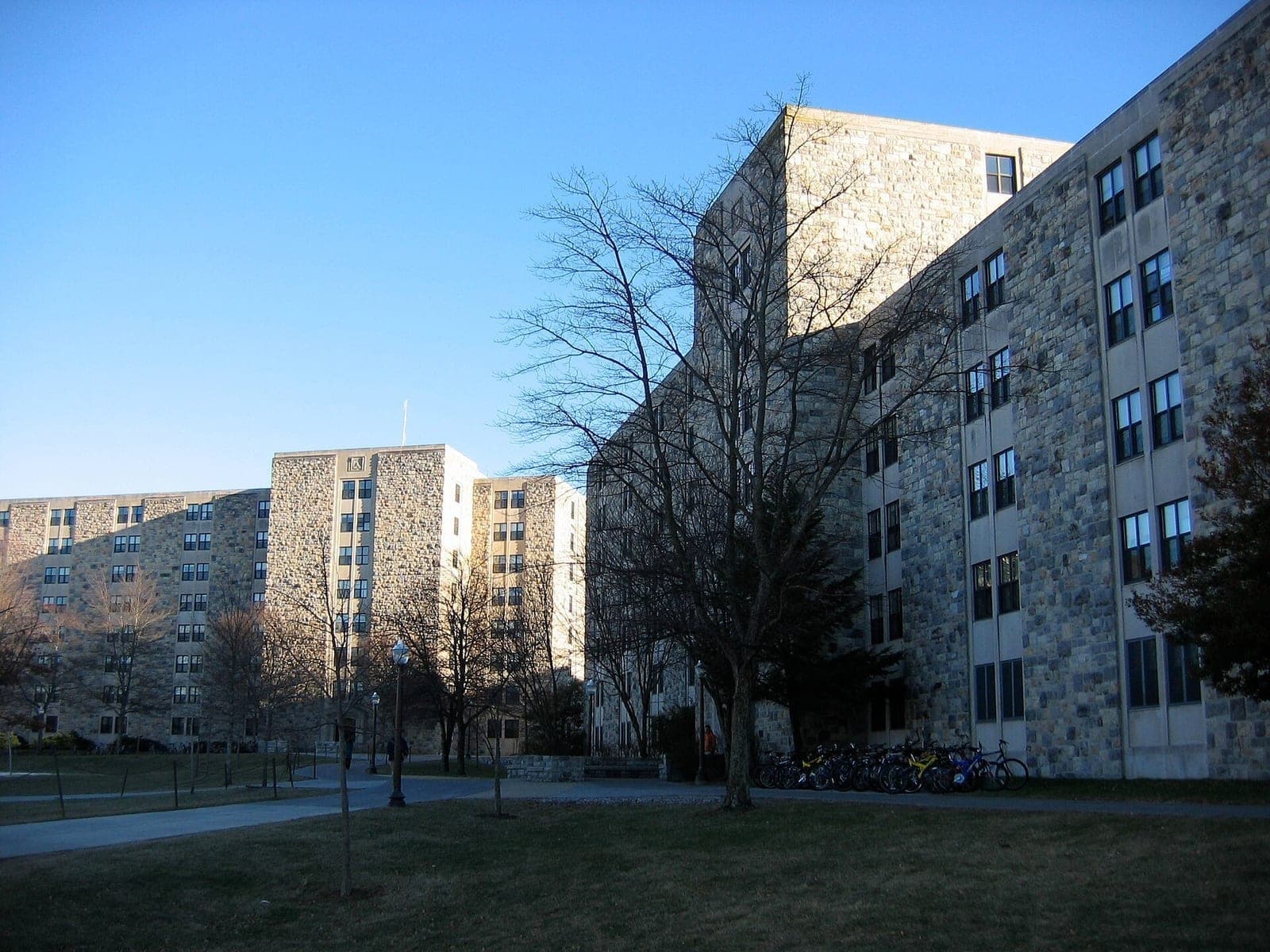
On June 3, 2002, the Board of Visitors renamed New Residence Hall West as Peddrew-Yates Hall. It was dedicated on March 29, 2003, during the 50th anniversary of Black students at Tech, with more than 500 people there. It was the first Tech building named for African Americans. Peddrew noted that he had not been allowed to live on campus, and called the honor ironic but still great.
In August 2020 the board voted unanimously to rename two more. Lee Hall became Hoge Hall. Barringer Hall became Whitehurst Hall.
The reasons were on the record. In 1997 students in a History of Virginia Tech class found that the 1896 Bugle yearbook listed Claudius Lee as president of a group calling itself the “K.K.K.” A task force kept the name then, and reviews in 2004 and 2018 kept it again, before the 2020 change. Paul Barringer, president from 1907 to 1913, had published white supremacist, pro-slavery writings.
Nearly seventy years after Peddrew boarded on Clay Street, the couple who opened their door have their name on a residence hall.
The firsts kept coming
In fall 1966 the first Black women were admitted: Linda Adams, Jacquelyn Butler, Linda Edmonds, Marguerite Harper, Chiquita Hudson and a sixth classmate named Hairston. Linda Adams, Class of 1968, became Tech’s first Black woman graduate.
In 1969 Marguerite Harper, as a student senator, won a resolution that ended Confederate flag displays at athletic events.
In 1967 Jerry Gaines became the first Black athlete on a full athletic scholarship, in track. His long jump record stood until 2013.
In 1969 Dr. Overton Johnson was hired as Tech’s first Black academic faculty member. He later became its first Black dean.